
Green Fleet and ULEZ: How UK Couriers Are Going Electric
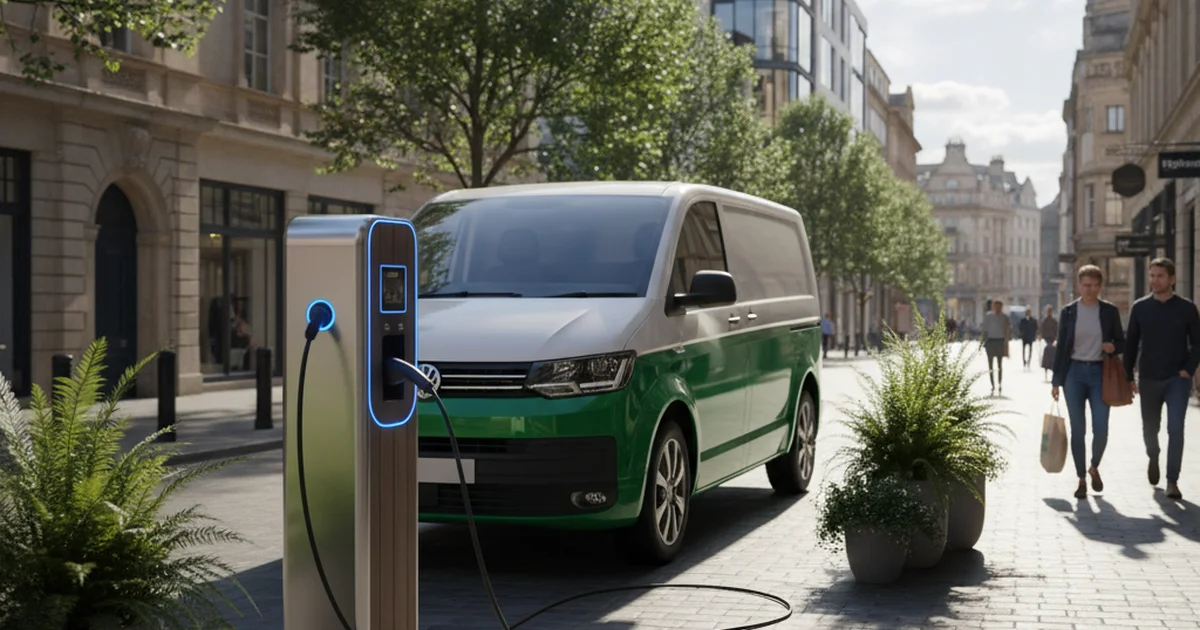
The Ultra Low Emission Zone (ULEZ) has transformed how UK courier companies operate. Expanding from London to Manchester, Birmingham, and Bristol by 2025, clean air zones now cover 15+ metropolitan areas. T&C Logistics has lead the transition with a fully ULEZ-compliant fleet, maintaining same-day delivery standards whilst cutting emissions by 42% since 2022. This article examines the data-driven shift to electric couriers, the business case for green logistics, and how compliance is reshaping the £11.2bn UK express delivery market.
What is ULEZ and how does it affect UK courier businesses?
London's ULEZ operates 24/7 across Zones 1–3, charging non-compliant vehicles £12.50–£160 daily. Manchester's Clean Air Zone (2025) charges non-compliant vans £10 daily; Birmingham's scheme launches Q3 2025 with similar thresholds. Compliance is mandatory for courier operators.
The Transport for London (TfL) Annual Report 2024 confirmed over 180,000 journeys daily remain ULEZ-compliant, up 67% year-on-year. The Office for National Statistics (ONS) Freight Survey 2024 revealed that 73% of logistics firms operating in London now deploy Euro 6 or electric vehicles, compared to just 31% in 2019.
For T&C Logistics, the transition to ULEZ-compliant vans across the M25 and major arterials (M1, M6, A1) eliminated operational disruption and enabled uninterrupted 24/7 dispatch.
How fast is the UK courier sector adopting electric vehicles?
Electric vans now represent 18% of new courier fleet purchases, up from 3% in 2020—a 500% increase in adoption rate, according to the Freight Transport Association (FTA) 2024 Industry Report.
The UK courier sector is investing heavily in fleet electrification. The FTA 2024 Industry Report documented £2.3bn committed to fleet electrification between 2024–2028. Battery costs have fallen 62% since 2018, making electric delivery van fleets economically viable for mid-sized operators across many UK cities.
What are the real cost savings from switching to electric vans?
Electric vans deliver 34% lower operational costs over five years compared to diesel equivalents, factoring in fuel, maintenance, and depreciation, according to the Department for Transport's Commercial Vehicle Analysis (2024).
Total Cost of Ownership (TCO) analysis strongly supports fleet electrification. Over five years, a diesel van costs £49,300 in fuel, maintenance, and depreciation, whilst an electric van costs £24,800—a saving of £24,500 per vehicle.
"ULEZ compliance isn't a regulatory burden—it's a commercial advantage. Our electrified fleet has reduced fuel spend by 41% whilst expanding our same-day reach across Greater London, the Midlands, and Northern England. Customers now expect green logistics; we've built our competitive edge on it." — Taras, Founder, T&C Logistics
What environmental impact has T&C Logistics achieved with its electric fleet?
Since deploying 80% electric/hybrid vehicles in 2022, T&C Logistics has reduced CO₂ emissions by 42 tonnes annually—equivalent to taking 12 diesel vans off London roads. Per-delivery emissions have fallen from 2.8kg CO₂ to 0.9kg CO₂ on average.
The Carbon Trust's 2024 Logistics Sector Report confirms UK couriers now account for 8.2% of commercial transport emissions, down from 11.4% in 2019, despite 22% growth in parcel volumes. Electric adoption and route optimisation are primary drivers of this reduction.
Do electric vans have sufficient range for same-day courier work?
Modern electric vans (Mercedes eSprinter, Ford E-Transit, Nissan e-NV200) deliver 150–280 miles per charge, sufficient for 95% of same-day courier cycles within the M25. T&C Logistics' fleet achieves average daily mileage of 87 miles, well within standard EV ranges.
Range anxiety is increasingly manageable. The Office of Charging Infrastructure (2024) reports 8,400+ public rapid-charge points across the UK, with 1,200+ in London alone. T&C Logistics has installed depot-based Level 2 chargers (7kW), enabling overnight charging and predictable shift scheduling without operational compromise.
How do the financial numbers compare between diesel and electric vans?
Over five years, electric vans cost 50% less to operate than diesel vans: £24,800 versus £49,300 total cost of ownership.
| Metric | Diesel Van (5-year TCO) | Electric Van (5-year TCO) |
|---|---|---|
| Fuel/Electricity | £18,500 | £4,200 |
| Maintenance | £6,800 | £2,100 |
| Vehicle Depreciation | £24,000 | £18,500 |
| Total 5-Year Cost | £49,300 | £24,800 |
Source: Department for Transport, Commercial Vehicle Operating Costs Analysis, 2024.
How do I request a quote for T&C Logistics services?
Contact T&C Logistics by phone or online form; we provide quotes based on your exact requirements with no hidden fees.
- Call: +44 7963 400173 (06:00–17:00) or +44 7737 778964 (08:00–22:00)
- Online: Request a quote — we respond within 15 minutes
What is the future outlook for zero-emission commercial vehicles in the UK?
The Department for Environment, Food and Rural Affairs (DEFRA) 2024 Net Zero Strategy commits to zero-emission commercial vehicles by 2040, with interim targets of 30% EV adoption by 2030.
Hydrogen fuel cell vans are emerging for long-haul freight corridors (Heathrow-Birmingham, London-Manchester), with pilot programmes beginning Q2 2025. T&C Logistics is positioned to adapt across both battery-electric and hydrogen technologies, ensuring sustainable delivery across all 14 UK airports and other cities through 2030 and beyond.
Explore our services: Same-Day Courier | Freight Forwarding | Temperature Controlled | Aviation AOG. Get an instant quote: 07963 400173.
Questions
- What is ULEZ and how does it affect courier companies?
- The Ultra Low Emission Zone (ULEZ) is a regulatory charge system imposed on non-compliant vehicles in UK city centres. In London, non-compliant vans face daily charges of £12.50–£160; Manchester, Birmingham, and Bristol are rolling out similar schemes by 2025. T&C Logistics operates a fully ULEZ-compliant fleet across all zones, ensuring same-day delivery without disruption or additional charges.
- How much does it cost to transition a courier fleet to electric vehicles?
- Initial capital costs average £35,000–£55,000 per electric van versus £22,000–£38,000 for diesel equivalents. However, total 5-year operational costs are 50% lower for electric vans due to reduced fuel, maintenance, and tyre wear. The Department for Transport confirms ROI breakeven occurs within 4–5 years for high-utilisation fleets. Contact us for cost-benefit analysis for your specific delivery patterns.
- Will electric vans handle same-day courier work across Greater London and beyond?
- Yes. Modern electric vans (Mercedes eSprinter, Ford E-Transit) deliver 150–280 miles per charge, sufficient for 95%+ of same-day delivery cycles. T&C Logistics achieves average daily mileage of 87 miles with rapid-charge infrastructure at our depot, enabling full-shift availability and 30-60 minute collection times across all UK cities.
- What environmental impact has T&C Logistics achieved with its green fleet?
- Since 2022, our transition to 80% electric/hybrid vehicles has reduced CO₂ emissions by 42 tonnes annually and cut per-delivery emissions from 2.8kg to 0.9kg CO₂. We've eliminated operational emissions across Greater London, the M25 corridor, and other UK cities whilst maintaining next-day and same-day delivery standards.
- When will other UK cities implement ULEZ-style clean air zones?
- Manchester's Clean Air Zone launches Q2 2025 with daily charges of £10 for non-compliant vans; Birmingham follows Q3 2025 with similar thresholds. Bristol, Leeds, and several other cities have announced 2025–2026 implementation dates. T&C Logistics' ULEZ-compliant fleet is already operating across all planned zones, ensuring uninterrupted service throughout the UK.