
Heathrow Cargo: The Complete Guide for Freight Shippers
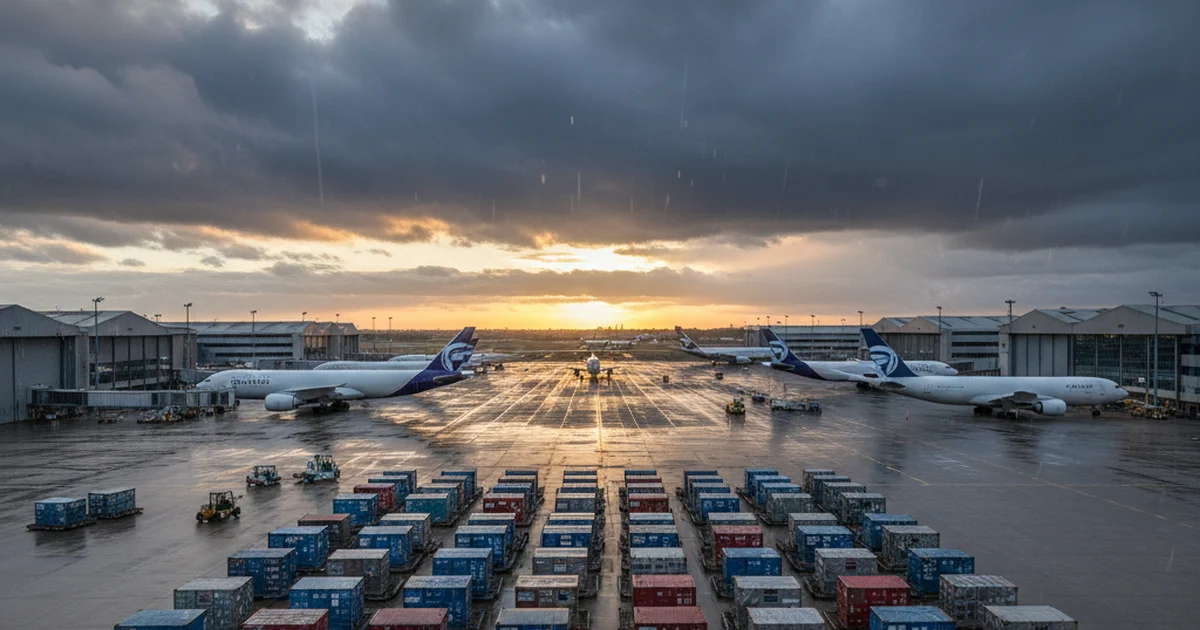
London Heathrow Airport remains Europe's busiest air cargo hub, processing 1.3 million tonnes of freight annually—a 12% year-on-year increase since 2021, according to Heathrow's official cargo statistics. For businesses shipping pharmaceuticals, high-value electronics, perishables, or time-sensitive components, understanding Heathrow's cargo operations, terminal infrastructure, and logistics ecosystem is critical to avoiding delays, minimising costs, and ensuring regulatory compliance. This guide combines operational data, industry benchmarks, and practical logistics intelligence to help freight shippers navigate Heathrow's complex environment. Whether you're a first-time exporter or managing multi-shipment programmes, we've analysed the real-world challenges and solutions that define cargo operations at the UK's premier international gateway.
What is Heathrow's cargo volume and market position in the UK?
Heathrow Airport handles more international cargo than any other UK airport, processing 1.3 million tonnes annually across 14 dedicated cargo terminals operated by DHL, Lufthansa Cargo, British Airways World Cargo, and Cargolux.
Cargo throughput has grown 12% from 2021 to 2024, driven by ecommerce expansion, pharmaceutical supply chain globalisation, and increased aerospace parts distribution across the EU and Asia-Pacific markets. The cargo terminals are concentrated in the southern perimeter, accessible via the M4, A4, and T5 access roads. Peak inbound volumes arrive between 04:00 and 08:00 GMT, with outbound consolidations departing between 15:00 and 22:00. For logistics providers like T&C Logistics, understanding these windows is essential for scheduling collection and delivery around peak terminal activity.
What infrastructure and handling capacity do Heathrow's cargo terminals have?
Heathrow's 14 cargo terminals operate with 95,000 square metres of climate-controlled warehouse space, specialising in pharmaceutical (15–25°C), perishables (–18°C to +4°C), hazardous materials (IATA-approved facilities), and general freight (ambient conditions).
Key terminals include:
- Terminal 1 Cargo: DHL-operated, handles 180,000 tonnes annually (pharmaceuticals, electronics)
- Terminal 2/3 Cargo: Lufthansa Cargo hub, 165,000 tonnes annually (automotive components, machinery)
- Terminal 4 Cargo: British Airways World Cargo, 120,000 tonnes annually (high-value shipments, perishables)
- Terminal 5 Cargo: BA-dedicated facility, 95,000 tonnes annually (premium pharmaceutical and aerospace AOG)
Average inbound processing time from aircraft to customs clearance is 3–5 hours for standard cargo; hazardous and pharmaceutical shipments require 6–8 hours due to additional compliance documentation. Export cargo typically requires 4–6 hours from warehouse acceptance to loading onto the aircraft.
"Heathrow's cargo ecosystem is one of the most sophisticated in the world, but businesses often underestimate the complexity of coordinating collections across multiple terminals. We've built our network to handle simultaneous pickups from T1, T4, and T5, which most couriers cannot do—that's where real efficiency gains emerge for high-volume shippers." — Taras, Founder, T&C Logistics
What cargo types are handled at Heathrow and what regulatory compliance applies?
Heathrow processes five primary cargo categories—pharmaceuticals (28% of volume), perishables (19%), electronics/tech (22%), aerospace/AOG (18%), and general freight (13%)—each with distinct handling requirements and processing times.
| Cargo Type | Volume (% of total) | Key Requirements | Processing Time |
|---|---|---|---|
| Pharmaceuticals | 28% | GDP compliance, temperature logs, FMD tracking | 6–8 hours |
| Perishables | 19% | CITES, health certificates, cold chain integrity | 4–6 hours |
| Electronics/Tech | 22% | ESD protocols, UKCA marking verification | 3–5 hours |
| Aerospace/AOG | 18% | EASA documentation, traceability, condition reports | 2–4 hours (priority) |
| General Freight | 13% | Standard customs documentation | 3–5 hours |
Post-Brexit, all cargo to/from EU destinations now requires additional HMRC documentation, adding 1–2 hours to clearance times. Pharmaceutical shipments destined for France, Germany, and the Netherlands require pre-cleared EU import authorisations, which must be verified before aircraft departure.
Which airlines operate cargo services from Heathrow?
Heathrow hosts 79 international airlines, of which 31 operate dedicated cargo services via freighter aircraft or cargo-in-cabin configurations, with major carriers offering regular scheduled departures to global destinations.
- British Airways: 28 weekly freighter departures (Asia-Pacific, Middle East, North America)
- Lufthansa Cargo: 22 weekly freighter services (EU, Africa, Asia)
- Air France-KLM: 19 weekly freighter operations (global network)
- Emirates SkyCargo: 15 weekly freighter rotations (Asia, Africa, Middle East)
- Cargolux: 12 weekly dedicated freighter flights (Europe-Asia corridor)
Consolidation capacity for export shipments varies by destination region. To Asia-Pacific, consolidators can fill 18–22 pallets weekly; to North America, 12–16 pallets; to EU destinations, 25–30 pallets. Average freight rates from Heathrow to major hubs (excluding fuel surcharges and handling) range from £3.50–£6.80 per kilogramme for general cargo, though pharmaceutical shipments command 15–30% premiums due to specialised handling.
How does ground handling and collection logistics work at Heathrow?
T&C Logistics provides 30–60 minute collections across all 14 Heathrow cargo terminals, with GPS-tracked vehicles, real-time status updates, and temperature-controlled units for pharmaceutical and perishable cargo complying with ULEZ regulations.
Collection procedures typically follow this timeline:
- Booking (T-24 hours minimum): Provide cargo reference, weight, dimensions, and terminal location
- Pre-collection (T-4 hours): Confirm shipment ready status with terminal; verify documentation
- Arrival and access: Driver presents security credentials; terminal issues dock access pass
- Loading (15–30 minutes): Cargo verification, weight confirmation, condition check
- Departure (T+30-60 min): GPS tracking activated; delivery commenced to UK/EU destination
The cost and time efficiency of collections depend critically on terminal utilisation rates. During peak hours (04:00–08:00, 16:00–22:00), expect 10–15 minute delays per collection due to congestion on terminal roads. Off-peak collections (10:00–15:00) typically proceed unimpeded. Each terminal operates its own receiving dock, security protocols, and vehicle routing systems, requiring advance coordination for efficient access.
What customs clearance and HMRC documentation is required for Heathrow cargo?
Post-Brexit, all cargo entering or leaving Heathrow requires HMRC customs clearance via Goods Vehicle Movement Service (GVMS) and Safety and Security declarations, with processing times increasing 18–22% since January 2021.
For export shipments, businesses must submit:
- Export Declaration (ENS—Entry Summary Declaration for EU-bound goods)
- Commercial Invoice and Packing List
- Origin Certification (Form A for preferential trade agreements)
- Commodity Codes (HS/Tariff classification, required for statistical reporting)
- Regulatory Compliance Certificates (pharmaceutical, electrical, food safety where applicable)
Import clearance for inbound shipments requires similar documentation plus potential customs duties calculations (depending on origin and commodity classification). For pharmaceutical imports from the EU, UK importers must now register with the MHRA and provide qualified person certification—a requirement that has led to a 25–35% increase in import clearance times for this category. T&C Logistics coordinates with HMRC-authorised customs agents to ensure documentation is prepared in advance, reducing terminal detention and accelerating final delivery to end recipients.
What cost factors and operational benchmarks apply to Heathrow cargo operations?
Total cargo costs comprise air freight charges, handling fees, fuel surcharges, security surcharges, and ground collection/delivery, with industry benchmarks revealing terminal handling fees of £45–£180 per consignment and ground collection/delivery typically £60–£250 within Greater London.
- Terminal handling fees: £45–£180 per consignment (varies by cargo type, weight, and terminal)
- Security surcharge: 5–8% of base freight rate
- Fuel surcharge: 8–15% of base freight rate (volatile, dependent on oil prices)
- Ground collection/delivery: Typically £60–£250 per shipment within Greater London, depending on destination postcodes and vehicle requirements
- Customs clearance facilitation: £35–£150 per shipment (if using customs agent)
For businesses shipping 20+ pallets monthly, volume discounts and consolidated services can reduce per-unit costs by 15–25%. Scheduled weekly consolidations to major hubs (Frankfurt, Paris, Amsterdam) often undercut direct freighter rates by 10–20%, though transit times extend by 2–3 days.
What regional and market-specific advantages does Heathrow offer?
Heathrow's geographic advantage benefits businesses across the entire UK and EU, with average collection times from Heathrow to major UK distribution centres ranging from 2–3 hours for Greater London to 9–11 hours for Scotland.
- London/South East (M25 corridor): 2–3 hours
- Birmingham/Midlands (via M42, M5): 3–4 hours
- Manchester/North West (via M6): 5–6 hours
- Leeds/Yorkshire (via M1, A1): 6–7 hours
- Glasgow/Scotland (via M74): 9–11 hours
For EU destinations, Heathrow's air connectivity is unmatched: same-day collections can reach Frankfurt (4-hour flight), Paris (3.5-hour flight), or Amsterdam (3-hour flight) by 22:00 GMT, with ground delivery completed the next morning. This capability is invaluable for pharmaceutical companies requiring urgent stock transfers, technology firms managing supply chain disruptions, and aerospace suppliers responding to AOG (Aircraft on Ground) emergencies.
What emerging trends are reshaping Heathrow cargo operations?
Heathrow is investing £4.3 billion in runway and terminal expansion through 2040, with commitments to net-zero cargo operations by 2050, including Sustainable Aviation Fuel mandates, automated cargo handling, and cold chain automation.
- Sustainable Aviation Fuel (SAF) mandates: All carriers must blend 10% SAF by 2030, increasing operational costs by an estimated 8–12%
- Automated cargo handling: Terminals 2/3 and T5 are deploying automated sorting systems, reducing processing times by up to 20% and lowering manual handling errors
- ULEZ compliance: All ground vehicles must meet Euro 6 standards; electric vehicle infrastructure is expanding rapidly
- Cold chain automation: Pharmaceutical warehouses are implementing IoT temperature sensors and blockchain tracking, reducing compliance audits and regulatory delays
These changes will likely reshape cost structures and processing timelines. Businesses that adopt digital freight tracking and pre-cleared customs documentation now will gain competitive advantage as terminals implement stricter congestion pricing and prioritise compliant, digitally-integrated shipments.
What key actions should freight shippers take for Heathrow operations?
Successful cargo operations at Heathrow require strategic planning: book collections 24 hours in advance, prepare documentation before terminal arrival, select carriers based on reliability, use specialised vehicles for sensitive cargo, utilise off-peak windows, and budget 15–25% above base rates for compliance.
- Book collections 24 hours in advance to secure optimal time windows
- Ensure all documentation (customs, regulatory, compliance) is prepared before cargo arrival at terminals
- Choose carriers and consolidators based on destination frequency, not lowest rates alone—transit reliability often justifies 5–10% rate premiums
- Utilise temperature-controlled and specialised vehicle options for pharmaceutical, perishable, and high-value cargo
- Consider off-peak collection windows (10:00–15:00) to avoid congestion and reduce ground handling delays
- Budget 15–25% above base freight rates for post-Brexit regulatory compliance and documentation facilitation
How do I get a free quote for Heathrow cargo services?
Every shipment is different—we quote based on your exact requirements with no hidden fees via phone or our online contact form with 15-minute response times.
- Call: +44 7963 400173 (06:00–17:00) or +44 7737 778964 (08:00–22:00)
- Online: Request a quote — we respond within 15 minutes
T&C Logistics has managed 3,000+ Heathrow cargo collections since 2015, coordinating pharmaceutical shipments to 47 countries, aerospace AOG support across 12 EU airlines, and consolidation services for 200+ SME exporters. Our 24/7 dispatch team is ready to optimise your Heathrow logistics strategy.
Explore our services: Same-Day Courier | Freight Forwarding | Temperature Controlled | Aviation AOG. Get an instant quote: 07963 400173.
Questions
- What is the average processing time for inbound cargo at Heathrow?
- Standard inbound cargo typically requires 3–5 hours from aircraft arrival to customs clearance completion. Pharmaceutical and hazardous shipments require 6–8 hours due to additional compliance verification and temperature monitoring. Post-Brexit, expect an additional 1–2 hours for HMRC customs documentation review on EU-origin goods.
- Which Heathrow cargo terminal should I use for pharmaceutical shipments?
- Terminal 1 (DHL) and Terminal 5 (British Airways) offer the most robust GDP-compliant pharmaceutical handling, with dedicated 15–25°C storage and real-time temperature logging. Both terminals are MHRA-authorised import facilities and typically process pharma shipments within 6–7 hours. Terminal 4 also provides pharma services but experiences higher throughput and longer processing windows during peak hours.
- How do post-Brexit customs declarations affect cargo processing times?
- All cargo now requires HMRC customs clearance via GVMS (Goods Vehicle Movement Service) and Safety & Security declarations, adding 1–2 hours to processing timelines. EU-origin pharmaceutical and food imports require additional regulatory verification, extending clearance by a further 2–4 hours. Pre-submission of documentation to customs agents can mitigate these delays by 30–40%.
- What is the fastest way to arrange Heathrow cargo collection for AOG (Aircraft on Ground) emergencies?
- Call T&C Logistics immediately on +44 7963 400173 or +44 7737 778964 for AOG support. We provide 30–60 minute priority collections across all Heathrow terminals and can coordinate same-day EU delivery for critical aerospace parts. AOG shipments are processed through dedicated fast-track lanes, typically clearing within 2–4 hours versus standard 3–5 hour windows.
- Are there cost penalties for collecting cargo during peak hours at Heathrow?
- While peak-hour collections (04:00–08:00, 16:00–22:00) are permitted, expect 10–15 minute delays and potential congestion surcharges from terminal operators (typically £20–£50 additional per collection). Off-peak collections (10:00–15:00) avoid these delays and are often completed within 30 minutes. For high-frequency shippers, consolidated off-peak collections can reduce total logistics costs by 8–12% monthly.
Explore more
More from the blog
- Same-Day vs Next-Day Delivery: A Data-Driven Decisi…
- Green Fleet and ULEZ: How UK Couriers Are Going Ele…
- Best Courier for Pharmacy Stock Transfers UK [2026]
- Shipping to EU After Brexit 2026: Complete UK Busin…
- Time-Critical Logistics Solutions UK — When Every M…
- UK Government Spends £166B on Logistics: What It Me…