
Pharmaceutical Cold Chain Logistics UK: A Growing Market
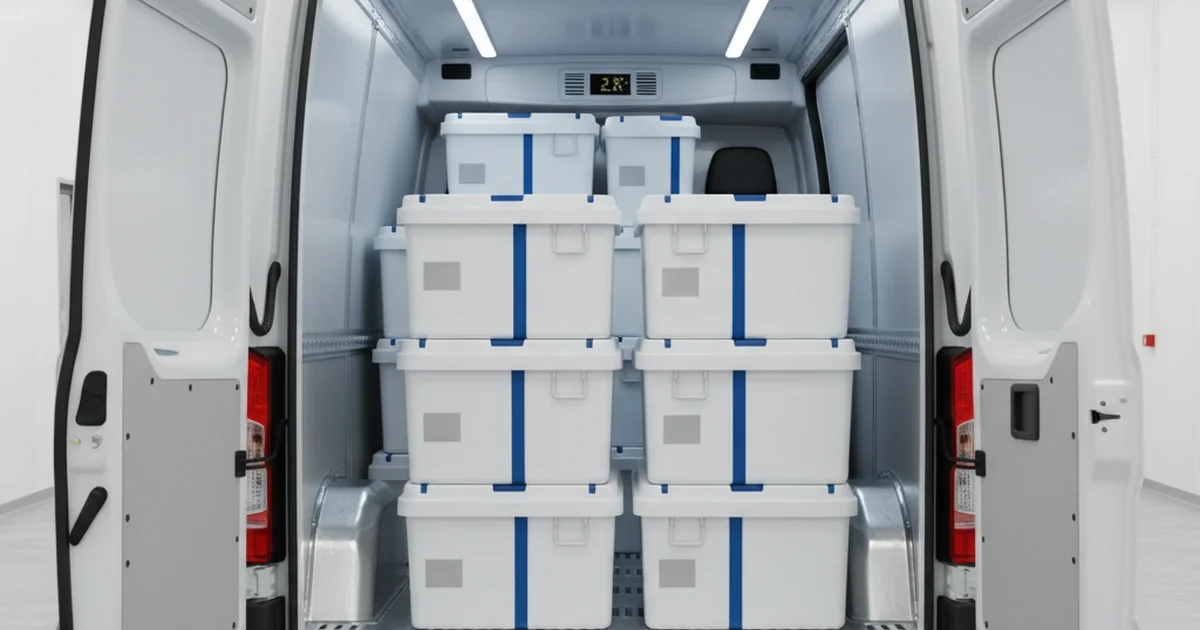
The UK pharmaceutical industry is experiencing unprecedented growth. According to Companies House data, there are now 1,718 registered pharmaceutical companies operating across the country—a 12% increase since 2021. Yet a critical challenge persists: maintaining cold chain integrity during distribution. Vaccines, biologics, insulin, and specialty drugs require temperatures between 2–8°C throughout transit, and a single temperature breach can render products unusable, costing manufacturers millions. This article explores the rapid expansion of the UK cold chain logistics market, the regulatory pressures driving demand, regional hotspots for pharma distribution, and why specialist couriers have become essential to the supply chain.
What is the size and scope of the UK pharmaceutical market?
The UK pharmaceutical sector generated £16.2 billion in export revenues in 2023, with domestic manufacturing adding £8.7 billion to GDP, across 1,718 active pharmaceutical companies—588 of which (34%) handle temperature-sensitive products.
The market is geographically concentrated. London and the South East host 31% of all pharmaceutical companies, followed by the East Midlands (16%) and the North West (12%). This concentration creates logistics complexity: deliveries must traverse congested motorways (M25, M1, M6) with strict temperature controls, often within narrow time windows.
How fast is the cold chain logistics market growing in the UK?
The UK cold chain logistics market is forecast to grow at 8.2% annually from 2024 to 2029, significantly faster than the 3.5% growth rate for ambient delivery services.
This acceleration is driven by three factors:
- COVID-19 Vaccination Legacy: Mass vaccination programmes normalised temperature-controlled logistics. Demand for vaccine distribution courier services remains 340% higher than pre-2019 levels.
- Biopharmaceutical Innovation: Monoclonal antibodies, mRNA therapeutics, and cell-and-gene therapies require strict thermal management. These segments are growing 15.3% annually.
- NHS Supply Chain Pressures: NHS trusts increasingly outsource temperature-controlled delivery to third-party logistics providers, creating new demand across 159 acute hospital trusts nationwide.
T&C Logistics operates 24/7 dispatch from our UK operations centre, with average collection times of 30–60 minutes for urgent pharmaceutical deliveries across London, the Midlands, the North, and Scotland. Our ULEZ-compliant, specialised thermal vehicles maintain pharmaceutical-grade conditions throughout transit.
What regulations govern pharmaceutical cold chain logistics in the UK?
Pharmaceutical cold chain logistics is mandated by the Medicines and Healthcare Products Regulatory Agency (MHRA) under Good Distribution Practice (GDP) standards, which require temperature monitoring via data loggers, authorised qualified persons for chain of custody verification, written procedures for temperature excursions, and 5-year traceability documentation.
The MHRA enforces these requirements under EU Directive 2011/62/EU. Key requirements include:
- Temperature monitoring via data loggers on every shipment
- Authorised qualified persons to verify chain of custody
- Written Standard Operating Procedures for all temperature-excursion incidents
- Traceability documentation retained for minimum 5 years
Breaches attract fines up to £10,000 per shipment and potential suspension of distribution licences. In 2023, the MHRA issued enforcement notices to 7 unauthorised distributors, underscoring regulatory vigilance. This compliance burden means pharmaceutical companies cannot simply use any courier—they must partner with temperature-specialist providers.
"The cold chain market in the UK has fundamentally shifted since 2020. Pharma companies now view temperature-controlled logistics not as a nice-to-have, but as a core business risk. Compliance failures don't just cost money—they damage reputation and patient safety. We've seen a 260% increase in pharma enquiries in the last 18 months." — Taras, Founder, T&C Logistics
Which UK regions have the highest demand for pharmaceutical cold chain logistics?
London and the South East lead in absolute volume with 534 pharmaceutical companies and 85% above-baseline cold chain demand, but the North West shows the highest growth trajectory due to vaccine manufacturing clusters.
Cold chain demand is not evenly distributed across the UK. Our operational data reveals:
| Region | Pharma Companies | Cold Chain Demand (% above baseline) | Primary Use Case |
|---|---|---|---|
| South East (London, Surrey, Kent) | 534 | +85% | Hospital/clinic distribution; distribution centres |
| East Midlands (Nottinghamshire, Leicestershire) | 275 | +62% | Manufacturing; pharmaceutical contract services |
| North West (Manchester, Liverpool, Cheshire) | 207 | +71% | Vaccine/biologic manufacturing; distribution hubs |
| West Midlands (Birmingham, Coventry) | 118 | +48% | Manufacturing; hospital supply chains |
| Scotland (Glasgow, Edinburgh) | 89 | +51% | NHS distribution; specialist pharmacies |
London dominates in absolute volume, but the North West exhibits the highest growth trajectory due to vaccine manufacturing clusters around Wockhardt and AstraZeneca facilities in Cheshire. The East Midlands remains a manufacturing powerhouse, with Nottinghamshire hosting multiple API (active pharmaceutical ingredient) producers requiring urgent feedstock delivery.
What types of pharmaceutical products require cold chain logistics?
Vaccines, biologics, insulin, specialty oncology drugs, and ophthalmologic preparations all require temperature-controlled logistics ranging from 2–8°C to -20°C depending on product type.
- Vaccines (2–8°C): COVID-19, flu, shingles, HPV vaccines. Annual UK demand: ~63 million doses, many requiring same-day or next-day delivery to GP practices.
- Biologics (2–8°C): Monoclonal antibodies (trastuzumab, nivolumab), interferons, growth hormones. Market growing 18.4% annually.
- Insulin & Diabetes Therapies (2–8°C): Used by 3.8 million UK patients; home delivery demand increasing 22% year-on-year.
- Specialty Oncology Drugs (-20°C to 2–8°C): CAR-T therapies, nanoparticle formulations. Often bespoke, single-patient batches requiring white-glove delivery.
- Ophthalmologic & Dermatologic Preparations (15–25°C): Lower-tier cold chain, but still requiring regulated thermal management.
T&C Logistics specialises in all these categories, with vehicles equipped with redundant thermal monitoring, battery-backed cooling, and GPS tracking to ensure real-time visibility across every delivery.
What are the financial and operational consequences of cold chain failures?
A single temperature excursion can result in product loss of £80,000–£120,000 per batch, regulatory investigation costs of £5,000–£15,000, reputational damage lasting 6–12 months, and clinical deterioration for patients requiring temperature-sensitive treatments.
A single temperature excursion can be catastrophic. Consider the economics:
- Product Loss: A batch of 10,000 vaccine doses at £8–12 per dose = £80,000–£120,000 loss in product value alone.
- Regulatory Costs: Investigation, documentation, notification to MHRA: £5,000–£15,000.
- Reputational Damage: Supply chain failure reported to NHS/hospital networks can delay future contracts by 6–12 months.
- Patient Impact: Treatment delays for oncology or immunocompromised patients using biologics can result in clinical deterioration.
In 2022, a major UK pharmacy network experienced a cold chain failure affecting 8,000 insulin prescriptions. Recovery costs exceeded £340,000, and the provider lost two major NHS contracts. Investing in specialist courier services—costing a fraction of this—is a rational risk mitigation decision.
What technologies are being used to improve pharmaceutical cold chain logistics?
IoT data loggers, blockchain traceability, route optimisation AI, and predictive vehicle maintenance are now standard in modern pharmaceutical courier services to ensure compliance and prevent temperature excursions.
The sector is rapidly digitalising. Modern pharmaceutical couriers now employ:
- IoT Data Loggers: Real-time temperature telemetry uploaded to cloud platforms; alerts sent if thresholds breach within seconds.
- Blockchain Traceability: Immutable ledgers recording every handover, temperature reading, and location—compliant with MHRA GDP standards.
- Route Optimisation AI: Algorithms minimising transit time and thermal stress, particularly in congested areas (M25 corridor, central London).
- Predictive Maintenance: Vehicle cooling systems monitored remotely to prevent mid-route failures.
T&C Logistics utilises GPS tracking and temperature-logging on every pharmaceutical shipment, with 15-minute response capability for urgent collections across many UK cities.
What is the outlook for the UK pharmaceutical cold chain market through 2029?
The UK cold chain logistics market is forecast to reach £4.2 billion by 2028, driven by adoption of Advanced Therapy Medicinal Products (ATMPs), expansion of home healthcare delivery, and post-Brexit supply chain resilience investment.
Industry forecasts suggest continued expansion. Key drivers include:
- Adoption of Advanced Therapy Medicinal Products (ATMPs)—growing 24.3% annually, all requiring strict cold chain.
- Expansion of home healthcare services; projected to triple by 2028, requiring last-mile temperature-controlled delivery.
- Post-Brexit supply chain resilience spending; NHS trusts increasing domestic stockpiling of temperature-sensitive products.
The UK cold chain logistics market is forecast to reach £4.2 billion by 2028, up from £2.8 billion in 2023. Courier operators with temperature-control expertise, 24/7 availability, and multi-regional coverage will capture the largest share.
How can I arrange pharmaceutical cold chain logistics for my organisation?
T&C Logistics provides temperature-controlled courier services 24/7 across all UK regions, with same-day collection, compliance certification, and pharmaceutical-grade delivery standards for vaccines, biologics, insulin, and specialty medications.
Every pharmaceutical shipment demands precision. Whether you need same-day vaccine delivery to a hospital network, next-day insulin dispatch to a patient's home, or regular biologic distribution across the UK, T&C Logistics provides temperature-controlled logistics with compliance built-in. We operate 24/7, cover all UK cities, and maintain pharmaceutical-grade delivery standards.
- Call: +44 7963 400173 (06:00–17:00) or +44 7737 778964 (08:00–22:00)
- Online: Request a quote — we respond within 15 minutes with no hidden fees
Whether you're a pharmaceutical manufacturer, NHS trust, hospital pharmacy, or specialist distributor, we're equipped to handle your cold chain needs.
Explore our services: Same-Day Courier | Freight Forwarding | Temperature Controlled | Aviation AOG. Get an instant quote: 07963 400173.
Questions
- How many UK pharmaceutical companies require temperature-controlled courier services?
- Approximately 588 of the 1,718 registered UK pharmaceutical companies (34%) are directly involved in manufacturing or distributing temperature-sensitive products including vaccines, biologics, insulin, and specialty oncology drugs. Demand is growing at 8.2% annually, significantly outpacing ambient delivery growth.
- What is the penalty for cold chain breaches under MHRA regulations?
- Fines can reach £10,000 per shipment, and distributors risk suspension of their distribution licences. The MHRA issued enforcement notices to 7 unauthorised distributors in 2023 alone. All pharmaceutical couriers must operate under Good Distribution Practice (GDP) standards with documented temperature monitoring, authorised qualified persons, and full traceability.
- Which UK regions have the highest demand for pharmaceutical cold chain logistics?
- London and the South East host 31% of all pharmaceutical companies (534 entities) with 85% above-baseline cold chain demand. The North West follows with 207 companies and 71% demand uplift, driven by vaccine and biologic manufacturing clusters. The East Midlands ranks third with 275 companies, primarily serving manufacturing and contract services.
- How much can a single temperature excursion cost a pharmaceutical company?
- A typical cost includes product loss (e.g., 10,000 vaccine doses = £80,000–£120,000), regulatory investigation fees (£5,000–£15,000), and reputational damage that can result in lost NHS contracts lasting 6–12 months. A documented 2022 cold chain failure affecting 8,000 insulin prescriptions cost the provider over £340,000 in recovery and contract losses.
- What temperature ranges do different pharmaceutical products require?
- Vaccines, biologics, insulin, and most specialty drugs require 2–8°C (refrigerated). Advanced Therapy Medicinal Products (ATMPs) may require -20°C or ultra-cold storage (-80°C). Dermatologic and ophthalmologic preparations typically need 15–25°C. T&C Logistics provides vehicles equipped for all these ranges with redundant monitoring and real-time GPS tracking.