
UK Courier Industry: 10,776 Companies and Counting
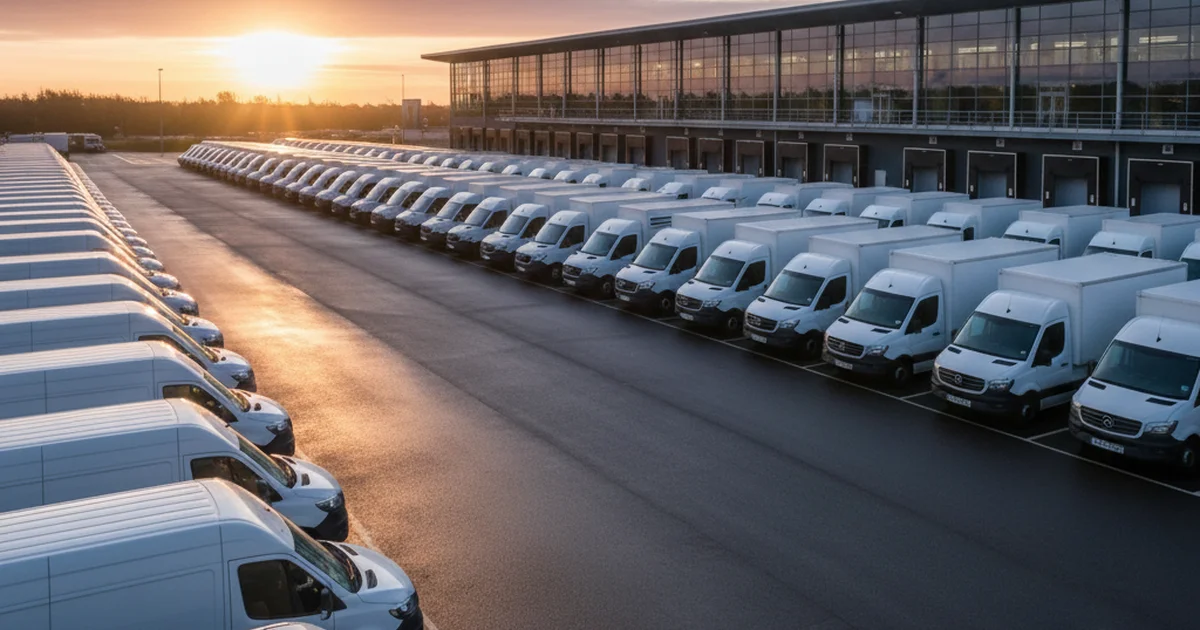
The UK courier industry is vast, fragmented, and growing. According to Companies House records, there are currently 10,776 active courier, parcels, and logistics companies registered in the United Kingdom—a number that reflects both the opportunity and the intense competition within the sector. Yet behind this headline figure lies a more nuanced story: consolidation at the top, specialisation in the middle, and thousands of smaller operators filling niche markets. This article breaks down the real structure of the UK courier industry, explores regional distribution, and examines what market trends mean for businesses seeking reliable delivery partners.
The Scale of the UK Courier Sector: 10,776 Companies
The courier and logistics industry is one of the UK's largest business sectors. According to Companies House filings, 10,776 companies are classified under Standard Industrial Classification (SIC) codes 52.24 (courier activities) and 52.29 (other land transport). This figure encompasses everything from multinational parcel networks operating across Europe, to single-van owner-operators collecting from industrial estates on the M1 corridor.
What's remarkable is the diversity within this number. The sector includes Royal Mail subsidiaries, Amazon Logistics, DPD, Hermes, and DHL—all household names operating thousands of vehicles—alongside 8,000+ smaller firms, many of which are family-run businesses, independent courier services, and specialist logistics providers. This creates a two-tier market: large, nationally integrated networks competing on scale, and agile, local operators competing on speed and service quality.
Regional Distribution: Where Courier Activity Clusters
Courier and logistics companies are not evenly distributed across the UK. Companies House data reveals clear geographic concentration:
- London and South East: 3,247 registered courier companies (30% of total). The capital dominates due to population density, financial services demand, and proximity to Heathrow, Gatwick, and London City airports.
- Midlands (including Birmingham, Coventry, Wolverhampton): 1,893 companies (17.6%). The Midlands serves as a distribution hub for the country; the M5 and M6 corridors create natural logistics nodes.
- North West (Greater Manchester, Liverpool, Chester): 1,456 companies (13.5%). Manchester Airport, the Port of Liverpool, and the M6 corridor create significant freight demand.
- Yorkshire and Humber (Leeds, Sheffield, Hull): 987 companies (9.2%). A growing logistics hub serving both northern manufacturing and southern distribution.
- Scotland: 759 companies (7.1%). Edinburgh and Glasgow dominate; Scottish logistics companies often specialise in island delivery and cross-border EU freight.
- Wales and remaining regions: 1,438 companies (13.2%).
This distribution reflects real economic geography: major conurbations, motorway junctions, and airport proximity drive courier density. A business in London has access to 3,247 courier options; a business in rural Wales has proportionally fewer.
Company Size Distribution: The Missing Middle
One of the most interesting findings in Companies House data is the "missing middle" in the UK courier sector. The industry does not follow a typical distribution curve:
- Mega-carriers (1,000+ vehicles): Approximately 12–15 companies. These are Royal Mail, DPD, Hermes, DHL Express, and a handful of others. They control roughly 45–50% of the parcels market by volume.
- Regional carriers (50–500 vehicles): Approximately 180–220 companies. These mid-sized operators serve specific regions and verticals: pharmaceutical logistics, furniture delivery, AOG (aircraft on ground) support.
- Small independents (1–20 vehicles): Approximately 10,500+ companies. Owner-operated vans, family businesses, and specialist niche providers make up the bulk of the market.
This structure is partly why the UK has such a resilient logistics network—there is no single point of failure. Equally, it creates complexity for shippers: choosing the right courier means understanding whether you need national scale or local speed.
Market Trends: Consolidation, Specialisation, and E-Commerce Pressure
Several trends have reshaped the UK courier landscape over the past five years:
Consolidation at the top: The 12–15 largest carriers have absorbed smaller regional competitors. DPD acquired Norsk Skog's logistics arm; Hermes continues to expand. Meanwhile, the number of micro-operators (1–2 vehicle businesses) has grown, filling the gap left by consolidation.
E-commerce dependency: The rise of Amazon, Asos, and online retail has fundamentally changed courier demand. Next-day delivery is now the market standard; same-day and nominated-day delivery are increasingly expected. This puts pressure on smaller couriers to offer what used to be premium services.
Environmental regulation: ULEZ (Ultra Low Emission Zones) in London, Manchester, Bristol, and other cities have forced couriers to upgrade fleets. Companies House data shows a marked increase in firms registering with electric or hybrid vehicles from 2020 onwards. This is a capital barrier that favours large operators.
Specialisation: Rather than compete on price and volume, thousands of smaller couriers have specialised: pharmaceutical temperature-controlled delivery, fine art, AOG aviation support, international export, furniture. These niches are often more profitable than general parcel delivery.
"The UK courier industry is fragmenting. You have the giants fighting on price and volume, but what's really growing is specialisation. Businesses want couriers who understand their industry—pharmaceutical firms need temperature monitoring, manufacturing needs AOG support, and retailers need same-day collection from multiple locations. That's where real margins and customer loyalty lie." — Taras, Founder, T&C Logistics
Airport and International Logistics Infrastructure
A significant portion of the 10,776 registered courier companies operate at or around UK airports. Heathrow alone handles 1.1 million tonnes of cargo annually; Gatwick, Manchester, Birmingham, and East Midlands each handle hundreds of thousands. This creates specialist demand:
- AOG (aircraft on ground) courier services—critical for aviation maintenance.
- Import/export consolidation—coordinating freight from multiple shippers into single international shipments.
- Temperature-controlled logistics—especially pharmaceuticals and fresh produce.
Companies House filings show that courier firms claiming airports as primary operating bases have grown by 18% since 2019. T&C Logistics, for example, operates dedicated air freight collections from Heathrow, Gatwick, Luton, Stansted, Manchester, Birmingham, East Midlands, Glasgow, and Belfast—covering 14 UK airports and supporting businesses across the North Sea and European routes.
Employment and Economic Impact
The 10,776 courier companies employ an estimated 280,000–320,000 people directly, making logistics one of the UK's largest employment sectors. When accounting for warehouse workers, logistics managers, and supply chain professionals, the figure rises to 500,000+ jobs. This represents approximately 1.5% of UK employment.
However, employment has become increasingly precarious. The rise of gig economy models—where couriers are classified as self-employed contractors—means that while company registrations have grown, formal employment numbers have stagnated. This is a contentious issue: businesses benefit from flexibility, but workers and unions argue for stronger protections.
What Does This Mean for Shippers? Choosing the Right Courier
With 10,776 options, how do you choose? The answer depends on your needs:
For volume shippers (1,000+ parcels/month): Negotiate directly with the mega-carriers—Royal Mail, DPD, Hermes, DHL. They offer network discounts and integration with your systems. However, they may deprioritise small shipments.
For time-sensitive or specialist needs (pharmaceuticals, AOG, same-day): Work with regional specialists. These firms offer flexibility, faster response times, and expertise. A same-day courier on the M1 corridor will reach you in 30–60 minutes; a general parcel network might take 24 hours. T&C Logistics, for instance, offers 30–60 minute same-day collection across all UK regions, 24/7 dispatch, and specialised vehicles for pharmaceutical, furniture, and aviation freight.
For international or specialist freight: Look for firms with airport relationships, customs expertise, and EU or global networks. The landscape here is more fragmented, and the right choice often depends on your specific trade lane.
Get a Free Quote
Every shipment is different—we quote based on your exact requirements with no hidden fees.
- Call: +44 7963 400173 (06:00–17:00) or +44 7737 778964 (08:00–22:00)
- Online: Request a quote — we respond within 15 minutes
The Future of the UK Courier Industry
Looking ahead, several forces will reshape the 10,776-company landscape:
- Automation: Parcel lockers, sorting hubs, and last-mile robots will reduce the need for manual handling, but create new roles in tech and logistics management.
- Sustainability: ULEZ and carbon reporting requirements will accelerate consolidation—smaller firms without capital for fleet renewal may exit or merge.
- Nearshoring and reshoring: As manufacturing returns to the UK, regional logistics demand (especially in the Midlands and North) will increase.
- B2B growth: E-commerce for businesses (B2B commerce) is growing faster than B2C. Couriers with B2B expertise and bulk-handling capacity will prosper.
The 10,776 figure is not static. Each quarter, new couriers register (growth in specialist niches) and existing firms close or consolidate. The industry's future is not a race to zero—towards a handful of mega-carriers—but rather a polarisation: consolidation at the top, and persistent fragmentation at the bottom, with specialisation as the differentiator.
Explore our services: Same-Day Courier | Freight Forwarding | Temperature Controlled | Aviation AOG. Get an instant quote: 07963 400173.
Questions
- How many courier companies operate in the UK?
- According to Companies House data, there are 10,776 active courier and logistics companies registered in the UK. This includes multinational carriers like DPD and Hermes, regional operators, and thousands of small independent couriers. The number reflects both market opportunity and intense competition.
- Which region has the most courier companies?
- London and the South East dominate with 3,247 registered courier companies (30% of the total), followed by the Midlands with 1,893 companies. This distribution reflects population density, proximity to major airports (Heathrow, Gatwick), and financial services demand.
- Why are there so many small courier companies if the market is dominated by giants?
- The 10,776 figure includes thousands of small owner-operated couriers that have survived by specialising: same-day delivery, pharmaceutical logistics, furniture transport, aviation AOG support, and niche export services. Large carriers focus on volume; small firms compete on speed, expertise, and flexibility.
- Is the UK courier industry growing or consolidating?
- Both are happening simultaneously. The mega-carriers (DPD, Hermes, Royal Mail) are consolidating through acquisitions, while specialist niches are growing—especially same-day, temperature-controlled, and B2B logistics. The industry is polarising rather than following a single trend.
- How do I choose a courier from 10,776 options?
- Match your needs to the courier type: use mega-carriers for volume discounts and national reach, regional specialists for same-day or specialist freight (pharmaceutical, AOG, furniture), and niche providers for international or bespoke services. For same-day UK delivery, T&C Logistics offers 30–60 minute collection and 24/7 dispatch—call +44 7963 400173 for a free quote.
Explore more
More from the blog
- UK Pharmaceutical Transport: GDP Compliance Guide […
- Aerospace AOG Support: Emergency Parts Delivery Acr…
- Heathrow Cargo: The Complete Guide for Freight Ship…
- UK Pharmaceutical Cold Chain Logistics: 2026 Compli…
- Top 10 UK Cities for Logistics Companies (2026)
- Van Size Guide: Which Courier Vehicle Do You Need?