
UK Pharmaceutical Cold Chain Logistics: 2026 Compliance Guide
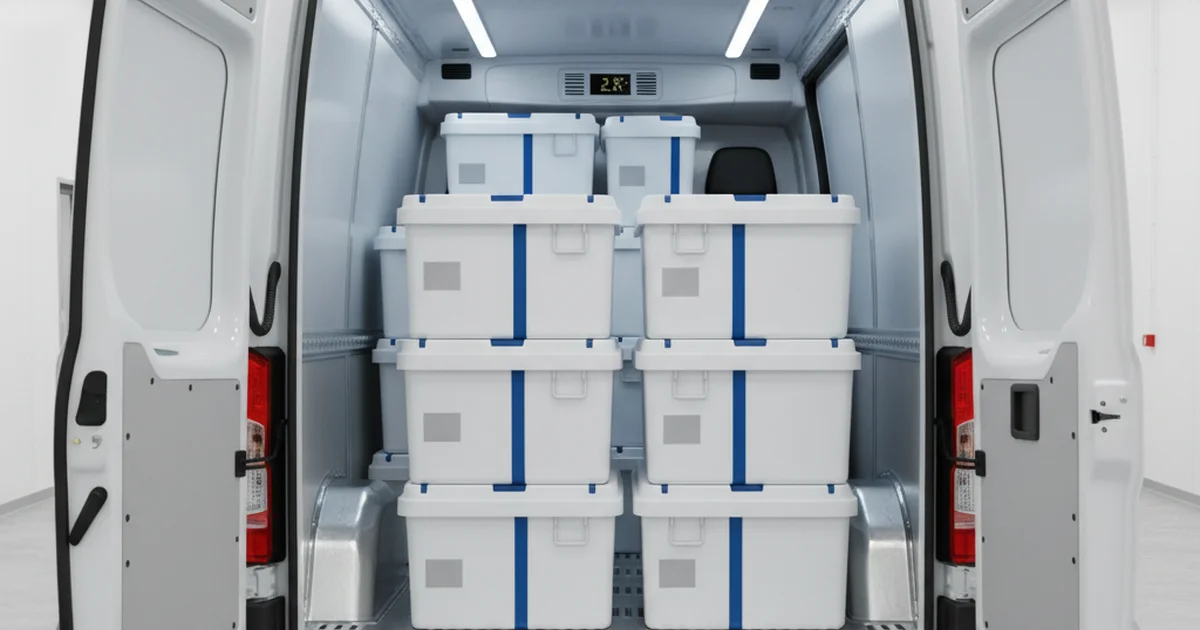
Pharmaceutical cold chain logistics sits at the intersection of public health, regulatory compliance, and operational precision. Whether you are a hospital pharmacy dispatching temperature-sensitive biologics, a clinical research organisation moving trial samples, or a wholesale distributor replenishing a community chemist's stock, the rules governing how those medicines travel across the UK tightened considerably after Brexit and continue to evolve into 2026. The Medicines and Healthcare products Regulatory Agency (MHRA) has updated its Good Distribution Practice (GDP) guidelines to reflect domestic post-Brexit frameworks, while the Department for Transport (DfT), DVSA, and local authorities such as Transport for London (TfL) have layered further obligations onto vehicles and operators. This pillar guide maps every compliance dimension a logistics provider or pharmaceutical shipper needs to understand heading into 2026—from MHRA licensing to ULEZ fleet requirements, from cryogenic packaging validation to same-day collection windows—so that medicines reach patients safely, legally, and on time.
Why does pharmaceutical cold chain logistics require specialist expertise?
A consumer electronics shipment delayed by four hours is an inconvenience; a plasma-derived medicine or mRNA vaccine held outside its 2°C–8°C window for the same period may be clinically compromised and dangerous. This distinction underpins the entire regulatory architecture governing pharmaceutical transport in the United Kingdom.
The UK courier market, valued at request a quote billion according to industry analysis, contains more than 10,776 registered courier businesses on the Companies House register. Yet the proportion of those businesses with validated cold chain capability and pharmaceutical-grade temperature monitoring infrastructure remains small. Pharmaceutical shippers who select a logistics partner without interrogating those credentials are assuming regulatory risk that ultimately lands with the Marketing Authorisation Holder (MAH) or the Wholesale Distribution Authorisation (WDA) holder—not the courier.
1.1 What temperature ranges and product categories fall under pharmaceutical cold chain?
Cold chain obligations extend across a broad spectrum of product categories:
- Refrigerated medicines (2°C–8°C): Vaccines, insulins, biological therapies, ophthalmic preparations, and many reconstituted antibiotics.
- Controlled room temperature (15°C–25°C): Most oral solid-dose medicines, topical preparations, and some diagnostics.
- Frozen products (−15°C to −25°C): Certain blood products, plasma, and some advanced therapy medicinal products (ATMPs).
- Deep-frozen / cryogenic (−60°C to −80°C and below): mRNA vaccines, gene therapy vectors, some tissue samples for clinical trials.
Each temperature band requires different packaging systems, different monitoring technologies, and different contingency protocols—all of which must be documented in the logistics provider's Standard Operating Procedures (SOPs) and Quality Management System (QMS).
1.2 What are the financial and safety consequences of cold chain failure?
The NHS spends approximately request a quote billion per year on medicines according to NHS England data. Even a small percentage of that value being destroyed through cold chain failure represents a significant financial and patient-safety risk. Beyond direct product loss, a cold chain breach can trigger regulatory investigation, suspension of a WDA, and reputational damage that takes years to recover.
How do MHRA Good Distribution Practice (GDP) guidelines apply to pharmaceutical transport?
The MHRA is the competent authority for human medicines regulation in Great Britain (England, Scotland, and Wales), with equivalent structures applying in Northern Ireland under the Windsor Framework. MHRA GDP guidance is accessible at gov.uk/guidance/good-distribution-practice.
2.1 What are the core GDP principles that apply to pharmaceutical transport?
The MHRA GDP guidelines set out obligations at every point in the distribution chain, including the physical transport leg. Key principles include Quality Management System with documented SOPs for temperature control and deviation management; Personnel training and competency assessments appropriate to role; Premises and equipment fit for purpose and regularly maintained; Documentation including chain-of-custody records with temperature data; and Complaints, returns, and recall procedures that must exist and be tested.
- Quality Management System: Every party in the supply chain must operate a documented QMS that includes SOPs for temperature control, deviation management, and product recall.
- Personnel: Staff and contracted couriers involved in transporting medicines must receive training appropriate to their role. Documented competency assessments are expected.
- Premises and equipment: Vehicles and containers used for pharmaceutical transport must be fit for purpose, regularly maintained, cleaned, and qualified where temperature control is critical.
- Documentation: Every delivery must generate a chain-of-custody record. For temperature-sensitive shipments this must include continuous data logger output or equivalent electronic records.
- Complaints, returns, suspected falsified medicines, and recalls: Procedures must exist and be tested.
2.2 Who is responsible for ensuring couriers meet GDP requirements?
A courier company does not typically hold a WDA itself—that licence belongs to the pharmaceutical wholesale distributor or the pharmacy. However, the WDA holder remains responsible for the conduct of any third-party logistics provider it engages. MHRA guidance explicitly states that the WDA holder must ensure its transport partners operate under conditions that meet GDP requirements. In practice, this means pharmaceutical shippers should audit their courier against GDP criteria before engagement and at regular intervals thereafter. Failure to do so is a finding during MHRA inspection.
2.3 What special regulatory considerations apply to Northern Ireland pharmaceutical transport?
Northern Ireland occupies a distinctive regulatory position under the Windsor Framework. Medicines placed on the market in Northern Ireland must comply with EU regulations as administered by the European Medicines Agency (EMA) and national competent authorities, meaning that any courier operating cross-border pharmaceutical routes between Great Britain and Northern Ireland must navigate dual compliance requirements. Operators should seek specific legal and regulatory advice if their pharmaceutical distribution activities include Northern Ireland routes.
What technology standards must pharmaceutical temperature monitoring devices meet in 2026?
Temperature has moved faster than regulation in this space. The proliferation of IoT-enabled data loggers, cellular-connected temperature sensors, and cloud-based monitoring dashboards means continuous, real-time temperature visibility is now commercially accessible even for same-day courier operations. The question for 2026 is not whether a logistics provider can monitor temperature—the tools are readily available—but whether it has documented protocols to act on what the data shows.
3.1 What are the minimum standards for data loggers used in pharmaceutical transport?
Temperature monitoring devices used in pharmaceutical transport should be calibrated against a traceable national standard (typically UKAS-accredited calibration in line with ISO/IEC 17025); record data at intervals of no greater than 10 minutes; generate tamper-evident reports for each shipment; and have alarms configured to product specification with MKT or min/max thresholds defined.
- Calibrated against a traceable national standard (typically UKAS-accredited calibration, in line with ISO/IEC 17025).
- Capable of recording and storing data at intervals of no greater than 10 minutes throughout the journey.
- Able to generate a tamper-evident PDF or CSV report for each shipment.
- Alarm-enabled, with defined MKT (Mean Kinetic Temperature) or simple min/max thresholds configured to product specification.
Where cellular or Bluetooth-enabled loggers are used, operators must have documented contingency plans for signal loss, device failure, and battery depletion. A data gap during transit—even if temperatures were within range throughout—constitutes a documentation deficiency that may require investigation.
3.2 How is pharmaceutical packaging validated for cold chain requirements?
The packaging system—insulated shipper, coolant type, pack-out configuration—must be validated to demonstrate it can maintain the required temperature range under defined worst-case conditions. Validation protocols typically follow ISTA 7D or equivalent standards and must account for Summer and winter ambient temperature profiles relevant to UK conditions; Maximum transit duration including worst-case traffic delays; and Coolant equilibration time and product placement within the shipper.
- Summer and winter ambient temperature profiles relevant to UK conditions.
- Maximum transit duration, including worst-case traffic delays.
- Coolant equilibration time and product placement within the shipper.
Where a courier is using packaging supplied or specified by the pharmaceutical shipper, the courier's responsibility extends to ensuring the pack-out instructions are followed precisely and documented on each shipment record.
3.3 How does shipment visibility support pharmaceutical chain-of-custody documentation?
shipment visibility deliveries provide a secondary audit trail that complements temperature data. In the event of a temperature excursion, GPS records showing vehicle location at every point in the journey enable investigators to correlate excursion timing with potential causes—a door-open event, an extended stop, an unexpected route deviation. T&C Logistics operates a fully shipment visibility fleet, ensuring that every pharmaceutical movement generates location data retained as part of the chain-of-custody documentation.
What vehicle and fleet compliance standards apply to pharmaceutical logistics in the UK?
The physical vehicle is the environment within which pharmaceutical products travel. Fleet compliance therefore directly affects the integrity of the cold chain and the operator's ability to access the routes where pharmaceutical customers are concentrated—particularly Central London, which hosts major hospital pharmacy hubs, clinical research facilities, and Heathrow air freight operations.
4.1 What operator licensing requirements apply to pharmaceutical transport vehicles?
Goods vehicle operators in the UK are regulated by the Driver and Vehicle Standards Agency (DVSA) and the Traffic Commissioners. Operators running vehicles over 3.5 tonnes gross vehicle weight require a Standard National or Standard International Operator's Licence. The DVSA's Guide to Maintaining Roadworthiness sets the maintenance standards applicable to pharmaceutical transport vehicles, including refrigeration unit servicing intervals. Non-compliance with operator licence conditions is an independent regulatory risk to pharmaceutical shippers who engage unlicensed or poorly maintained fleets.
4.2 How does ULEZ compliance affect pharmaceutical logistics operations in London?
Transport for London's Ultra Low Emission Zone (ULEZ) now covers all 32 London boroughs and the City of London. Vehicles that do not meet the Euro 6 (diesel) or Euro 4 (petrol) emission standards face a daily charge of request a quote for cars and light goods vehicles, with higher charges for heavier vehicles. For pharmaceutical logistics operators making multiple deliveries per day across London—serving NHS trusts, clinical research organisations, and Heathrow pharmaceutical freight handlers—ULEZ non-compliance is a material operating cost that erodes service viability.
T&C Logistics operates a ULEZ-compliant fleet across all London operations, ensuring unrestricted access to every postcode within the ULEZ boundary without additional charge or delay. This is not a minor operational detail for pharmaceutical customers: a courier that incurs ULEZ charges or, worse, avoids ULEZ-covered areas to reduce costs may fail to collect within the rapid collection window window that critical pharmaceutical shipments demand.
4.3 What qualification standards apply to refrigerated vehicles used for pharmaceutical transport?
Refrigerated vehicles used for pharmaceutical transport should undergo temperature mapping to demonstrate that the cargo area achieves and maintains the required temperature range under loaded and unloaded conditions in both summer and winter. The ATP Agreement (Agreement on the International Carriage of Perishable Foodstuffs) provides a recognised framework for refrigerated vehicle classification that many pharmaceutical operators reference, even though medicines are not food. ATP certificates are issued for five-year periods and require mid-term inspection.
What hazardous goods classifications apply to pharmaceutical cold chain shipments?
A significant proportion of pharmaceutical cold chain shipments also carry hazardous goods classification under ADR (the European Agreement Concerning the International Carriage of Dangerous Goods by Road), which continues to apply in the UK as domestic legislation post-Brexit. This adds a further compliance layer to what is already a complex operation.
5.1 What are common pharmaceutical hazardous goods classifications?
Class 6.2 (Infectious substances) covers clinical trial samples, diagnostic specimens, and biological reference materials; Class 3 (Flammable liquids) covers some alcohol-based preparations and solvents; Class 2 (Gases) covers medical gases including liquid nitrogen used as cryogenic coolant; and Class 9 (Miscellaneous dangerous goods) covers dry ice (solid carbon dioxide) used as coolant under UN 1845 packaging requirements.
- Class 6.2 (Infectious substances): Clinical trial samples, diagnostic specimens, and some biological reference materials.
- Class 3 (Flammable liquids): Some alcohol-based preparations and certain solvents used in pharmaceutical manufacturing support.
- Class 2 (Gases): Medical gases including liquid nitrogen used as a cryogenic coolant for deep-frozen pharmaceutical products.
- Class 9 (Miscellaneous dangerous goods): Dry ice (solid carbon dioxide) used as a coolant in pharmaceutical shippers, subject to UN 1845 packaging and labelling requirements.
5.2 What are the key handling rules for dry ice and liquid nitrogen in pharmaceutical transport?
Dry ice is arguably the most commonly encountered pharmaceutical hazardous substance in same-day courier operations. Under ADR, dry ice shipments must comply with UN 1845 requirements including packaging that permits carbon dioxide gas release to prevent pressure build-up; clear labelling with the UN number, proper shipping name, and net weight; quantity exemptions for small shipments with documentation still required; and driver awareness training regarding asphyxiation risk of CO₂ accumulation in enclosed vehicle spaces.
- Packaging that permits the release of carbon dioxide gas to prevent pressure build-up.
- Clear labelling with the UN number, proper shipping name, and net weight of dry ice.
- Quantity exemptions apply for small shipments, but documentation is still required.
- Driver awareness training regarding the asphyxiation risk of CO₂ accumulation in enclosed vehicle spaces.
T&C Logistics provides hazardous goods transport capability across its fleet, with drivers trained to the appropriate ADR standards and vehicles equipped with the required safety equipment.
How does pharmaceutical logistics integrate with Heathrow air freight operations?
Heathrow Airport is the UK's primary gateway for pharmaceutical air freight. The airport handled approximately 1.7 million tonnes of cargo in 2023 according to CAA statistics, with pharmaceutical products representing one of the highest-value cargo categories. For pharmaceutical shippers with time-critical international movements, the connection between domestic same-day courier and Heathrow air freight handler is a critical interface.
6.1 How do AOG principles apply to pharmaceutical emergency logistics?
AOG (Aircraft on Ground) logistics originated in aviation maintenance to describe emergency supply of parts required to return a grounded aircraft to service within the shortest possible time. The same operational philosophy—unconditional priority, 24/7 availability, direct routing, real-time communication—applies equally to pharmaceutical emergencies: a clinical trial site running out of investigational medicinal product (IMP), a hospital pharmacy facing a critical stock-out, or a patient awaiting a named-patient medicine import.
6.2 What pharmaceutical handling facilities are available at Heathrow?
Heathrow's Pharmaceutical Zone, operated in partnership with cargo handlers including IAG Cargo's CONSTANT CLIMATE facility, provides purpose-built temperature-controlled handling for pharmaceutical air freight. Pharmaceutical shippers booking air freight through Heathrow should ensure their same-day courier partner can deliver directly to the relevant cargo facility within the airline's acceptance cut-off window. A missed cut-off due to delayed collection is operationally equivalent to a cold chain breach in its consequences for patient supply.
T&C Logistics provides dedicated Heathrow air freight collection and delivery services with rapid collection window collection from any UK postcode, 24 hours a day, 365 days a year, ensuring that pharmaceutical air freight connections are never compromised by domestic logistics failure.
What additional regulatory obligations apply to controlled drugs transport?
Controlled drugs (CDs) transported as part of pharmaceutical logistics operations carry obligations beyond GDP. The Home Office Controlled Drugs Licensing framework, administered under the Misuse of Drugs Regulations 2001, governs who may possess, supply, and transport Schedule 1–5 controlled drugs. Couriers transporting CDs on behalf of a licensed WDA holder or pharmacy do so under the authority of the licence holder's licence; the courier itself does not require a separate CD licence for most transport activities, but must operate strictly within the conditions defined by the licence holder.
7.1 What security measures are required for controlled drug transport?
The Home Office and MHRA both expect that controlled drugs in transit are protected by security measures proportionate to the risk. For Schedule 2 and 3 controlled drugs this typically means Tamper-evident packaging with unique serialisation; Direct handover to an authorised recipient only; Signed proof of delivery retained as part of chain-of-custody; service visibility tools; and Incident reporting procedures for theft, loss, or suspected diversion.
- Tamper-evident packaging with unique serialisation.
- Direct handover to an authorised recipient—not left in a drop box or with an unauthorised individual.
- Signed proof of delivery retained as part of the chain-of-custody record.
- shipment visibility of the vehicle throughout the delivery.
- Incident reporting procedures for theft, loss, or suspected diversion.
What special transport requirements apply to clinical trials and investigational medicinal products?
Clinical trial logistics is a specialist subset of pharmaceutical cold chain transport governed by additional requirements under the Medicines for Human Use (Clinical Trials) Regulations 2004 (as amended for Great Britain post-Brexit), MHRA's guidance on GCP (Good Clinical Practice), and the specific requirements of each trial's protocol.
8.1 What are the key transport requirements for investigational medicinal products?
Investigational medicinal products frequently have more stringent temperature requirements, shorter shelf lives, and more complex documentation demands than commercial medicines. Key considerations include Protocol-specific temperature ranges defined in the Investigator's Brochure and trial protocol with any deviation triggering a mandatory deviation report; Blinding considerations where packaging and documentation must not reveal whether a shipment contains active drug or placebo; Chain of custody documentation of accountability at every handover point from sponsor to clinical site; and Emergency unblinding procedures that logistics operators should be aware of.
- Protocol-specific temperature ranges: IMP storage and transport conditions are defined in the Investigator's Brochure and the trial protocol. Any deviation triggers a mandatory deviation report.
- Blinding considerations: Where trial blinding must be maintained, packaging and documentation must not reveal whether a shipment contains active drug or placebo.
- Chain of custody: IMP shipments require a documented transfer of accountability at every handover point, from sponsor to clinical site.
- Emergency unblinding procedures: Logistics operators should be aware of (though not operationally involved in) the emergency unblinding process and ensure their documentation supports it.
8.2 What are CRO and sponsor responsibilities in clinical trial pharmaceutical logistics?
Contract Research Organisations (CROs) managing pharmaceutical clinical trials are responsible for qualifying their logistics partners. MHRA GCP inspections routinely examine IMP management, and deficiencies in transport documentation are a common finding. A logistics provider that cannot produce validated temperature records, calibrated equipment certificates, and signed chain-of-custody documents for every IMP delivery is not a viable clinical trial logistics partner regardless of its general service quality.
How do NHS supply structures affect pharmaceutical logistics requirements?
The NHS is the largest single customer for pharmaceutical logistics services in the United Kingdom. NHS Supply Chain, the body responsible for procuring and distributing products to NHS trusts, operates its own distribution network but relies on third-party same-day courier services for urgent, unplanned, and out-of-hours requirements. Hospital pharmacy departments, which dispense approximately 80% of all NHS prescription items by volume according to NHS England data, generate a continuous stream of urgent courier requirements that standard postal and overnight services cannot satisfy.
9.1 What are the typical service level requirements for NHS pharmaceutical deliveries?
Hospital pharmacies and NHS procurement teams typically specify the following service levels for urgent pharmaceutical courier requirements: Collection from supplier promptly of booking confirmation; Continuous data logging temperature monitoring with report provided with POD; Real-time shipment visibility accessible to NHS coordinator; Electronic proof of delivery with timestamp and recipient name; 24/7 365-days-a-year out-of-hours availability; and ULEZ compliance required for London hospital deliveries.
| Requirement | Standard |
|---|---|
| Collection from supplier | promptly of booking confirmation |
| Temperature monitoring | Continuous data logging, report provided with POD |
| shipment visibility | Real-time, accessible to NHS coordinator |
| Proof of delivery | Electronic, with timestamp and recipient name |
| Out-of-hours availability | 24/7, 365 days a year |
| ULEZ compliance | Required for London hospital deliveries |
9.2 How does the Care Quality Commission interface with pharmaceutical logistics?
The Care Quality Commission (CQC) regulates NHS and independent healthcare providers in England. Although the CQC does not directly regulate logistics providers, its inspections of hospital pharmacies and care homes examine medicines management, including the adequacy of temperature control during receipt of deliveries. A cold chain breach at the point of delivery—caused by a poorly insulated courier bag or an excessive transit time—can generate a CQC finding against the receiving pharmacy. This creates a strong incentive for NHS pharmacy managers to select couriers with documented cold chain capability rather than simply the lowest price.
What operational considerations apply to pharmaceutical logistics across many UK cities?
T&C Logistics, founded in 2020 and headquartered in the Thames Valley, provides same-day pharmaceutical cold chain services across many UK cities including London, Manchester, Birmingham, Glasgow, Edinburgh, Liverpool, Leeds, Sheffield, Bristol, Cardiff, and Belfast. Operating at national scale while maintaining the service quality standards that pharmaceutical customers demand requires careful attention to the operational variables that differ between cities.
10.1 What clean air zone compliance standards apply beyond London?
ULEZ is the most prominent clean air initiative affecting pharmaceutical couriers, but it is not the only one. Birmingham's Clean Air Zone (CAZ) became fully operational in 2021, and similar schemes are active or planned in Bristol, Bath, Portsmouth, Sheffield, and Greater Manchester. Each scheme has different vehicle standards, charge structures, and geographic boundaries. A pharmaceutical logistics provider operating nationally must maintain fleet compliance across all applicable clean air zones or risk both financial penalties and service failures when drivers avoid charged zones at the expense of delivery times.
10.2 How do devolved healthcare systems in Scotland and Wales affect pharmaceutical logistics?
Pharmaceutical regulation in Scotland and Wales sits within the same Great Britain MHRA framework as England, but healthcare delivery is devolved. NHS Scotland and NHS Wales have their own procurement structures, formularies, and pharmacy networks. Couriers serving pharmaceutical customers in Edinburgh, Glasgow, Cardiff, or Swansea should be familiar with the relevant NHS board structures and, where applicable, the NHS Scotland National Distribution Centre's logistics arrangements.
"Pharmaceutical customers don't just need speed—they need certainty. A 30-minute collection window means nothing if the driver arrives without a validated temperature logger or leaves without a signed chain-of-custody record. We built our cold chain operation around documentation discipline first, speed second, because that's the only order that makes regulatory sense."
— Taras Zavalinii, Founder, T&C Logistics
What due diligence criteria should pharmaceutical shippers use when selecting a cold chain courier?
Given the regulatory and patient-safety stakes, pharmaceutical shippers and WDA holders should apply structured due diligence before engaging a same-day courier for pharmaceutical transport. The following checklist consolidates the key criteria discussed throughout this guide.
11.1 What documentation and quality system standards should a courier demonstrate?
Does the courier have documented SOPs for pharmaceutical cold chain transport, including temperature deviation management; Can the courier provide evidence of staff training records and competency assessments relevant to pharmaceutical handling; Is there a documented corrective and preventive action (CAPA) process for quality deviations; and Can the courier provide temperature data reports in a format compatible with the shipper's quality system?
- Does the courier have documented SOPs for pharmaceutical cold chain transport, including temperature deviation management?
- Can the courier provide evidence of staff training records and competency assessments relevant to pharmaceutical handling?
- Is there a documented corrective and preventive action (CAPA) process for quality deviations?
- Can the courier provide temperature data reports in a format compatible with the shipper's quality system?
11.2 What equipment and vehicle standards should a courier meet?
Are temperature monitoring devices calibrated with current UKAS-traceable certificates; Has the packaging system been validated for the required temperature range and worst-case transit duration; Is the vehicle fleet ULEZ-compliant and, where applicable, compliant with other UK Clean Air Zones; Are refrigerated vehicles ATP-certified where applicable; and Is shipment visibility active on all vehicles used for pharmaceutical deliveries?
- Are temperature monitoring devices calibrated with current UKAS-traceable certificates?
- Has the packaging system been validated for the required temperature range and worst-case transit duration?
- Is the vehicle fleet ULEZ-compliant and, where applicable, compliant with other UK Clean Air Zones?
- Are refrigerated vehicles ATP-certified where applicable?
- Is shipment visibility active on all vehicles used for pharmaceutical deliveries?
11.3 What service capabilities should a courier provide?
Does the courier provide genuine 24/7 dispatch, including bank holidays and weekends; Can the courier achieve rapid collection window collection from the relevant postcode; Does the courier cover all cities in the shipper's distribution network; Is there capability for AOG-equivalent emergency escalation when required; and Can the courier provide Heathrow air freight collection and delivery within airline acceptance windows?
- Does the courier provide genuine 24/7 dispatch, including bank holidays and weekends?
- Can the courier achieve rapid collection window collection from the relevant postcode?
- Does the courier cover all cities in the shipper's distribution network?
- Is there capability for AOG-equivalent emergency escalation when required?
- Can the courier provide Heathrow air freight collection and delivery within airline acceptance windows?
11.4 What hazardous goods and controlled drug transport capabilities should a courier demonstrate?
Are drivers trained to the appropriate ADR standard for the goods being transported (including dry ice under UN 1845); Does the courier have documented procedures for controlled drug transport, including handover to authorised recipients only; and Is there a defined incident reporting process for loss, theft, or suspected diversion of controlled drugs?
- Are drivers trained to the appropriate ADR standard for the goods being transported (including dry ice under UN 1845)?
- Does the courier have documented procedures for controlled drug transport, including handover to authorised recipients only?
- Is there a defined incident reporting process for loss, theft, or suspected diversion of controlled drugs?
What developments will shape pharmaceutical cold chain logistics in 2026 and beyond?
Several developments will shape UK pharmaceutical cold chain logistics over the remainder of 2025 and into 2026 and beyond. Pharmaceutical shippers and logistics providers who anticipate these changes will be better placed to maintain compliance and competitive advantage.
12.1 How is MHRA digital transformation affecting pharmaceutical logistics?
MHRA's ongoing digital transformation programme includes enhanced electronic product information (ePI), serialisation under the UK Falsified Medicines Directive equivalent, and the potential for digital GDP documentation submission. Logistics providers who still rely on paper-based temperature records and handwritten chain-of-custody documents may find themselves unable to integrate with customer quality systems as digital requirements mature.
12.2 What logistics challenges do Advanced Therapy Medicinal Products (ATMPs) present?
The ATMP sector—encompassing gene therapies, cell therapies, and tissue-engineered products—is among the fastest-growing areas of UK pharmaceutical development, supported by initiatives such as the Cell and Gene Therapy Catapult. Many ATMPs require cryogenic storage and transport at −60°C to −196°C, chain-of-identity documentation that links each dose to a specific patient, and extremely short shelf lives measured in hours rather than days. The logistics demands of ATMPs represent the leading edge of what pharmaceutical cold chain capability will need to deliver over the next five years.
12.3 How are sustainability considerations affecting pharmaceutical cold chain logistics?
The pharmaceutical industry has made significant public commitments to reduce its carbon footprint, and cold chain logistics is one of the more carbon-intensive parts of the supply chain. The transition to electric refrigerated vehicles, phase-change materials replacing dry ice, and optimised routing algorithms to reduce unnecessary mileage are all active areas of development. For pharmaceutical shippers with published net-zero commitments, selecting logistics partners with credible decarbonisation roadmaps will become an increasingly prominent part of the vendor qualification process.
12.4 How is post-Brexit regulatory divergence affecting pharmaceutical logistics operators?
The UK's regulatory framework for medicines continues to diverge incrementally from EU regulations. Pharmaceutical logistics operators running cross-border routes between the UK and EU member states—or between Great Britain and Northern Ireland—must monitor regulatory developments closely to ensure their procedures remain compliant with both frameworks. The MHRA publishes updated guidance at gov.uk/mhra; operators should subscribe to relevant alerts and review their SOPs at least annually against current guidance.
How does T&C Logistics support your pharmaceutical cold chain requirements?
T&C Logistics has built its pharmaceutical cold chain service from the ground up to meet the compliance standards that MHRA, NHS customers, and clinical research organisations demand. Operating 24 hours a day, 365 days a year, with rapid collection window collection from any UK postcode, a ULEZ-compliant fleet, shipment visibility deliveries, and documented hazardous goods capability, T&C Logistics provides same-day pharmaceutical cold chain transport to customers across many UK cities—from London and the South East through the Midlands, the North, Scotland, Wales, and beyond.
Whether your requirement is an urgent hospital pharmacy stock transfer, an IMP delivery to a clinical trial site, a Heathrow air freight connection for a temperature-sensitive import, or a controlled drug delivery requiring signed chain-of-custody documentation, T&C Logistics has the operational capability and the compliance framework to deliver safely, on time, and within your regulatory requirements.
With a 5.0/5 Google Reviews rating from verified customers and a track record built since 2020 in the Thames Valley and across the UK, T&C Logistics is the same-day courier partner that pharmaceutical operations teams trust when the stakes are highest.
To discuss your pharmaceutical cold chain logistics requirements or request a quote, call T&C Logistics now on +44 7963 400173 (available 06:00–17:00) or complete our online quote form at tclogistics.uk/contact#quote-form. For out-of-hours enquiries, call +44 7737 778964 (available 08:00–22:00). Our dispatch team operates around the clock, every day of the year.
Which UK cities do you provide GDP-certified (partner carriers) pharmaceutical courier services?
GDP-certified (partner carriers) pharma courier services with temperature-controlled vehicles:
- Aberdeen
- Belfast
- Birmingham
- Brighton
- Bristol
- Cardiff
- Coventry
- Derby
- Edinburgh
- Glasgow
- Hull
- Leeds
- Leicester
- Liverpool
- London
- Luton
- Manchester
- Milton Keynes
- Newcastle
- Nottingham
- Oxford
- Plymouth
- Portsmouth
- Reading
- Sheffield
- Southampton
- Stoke
- Swansea
- Wakefield
- Wolverhampton
Where do you provide temperature-controlled transport services across the UK?
Cold chain logistics for pharmaceuticals, food, and biologics:
Questions
- Does T&C Logistics hold an MHRA licence for pharmaceutical transport?
- Same-day courier companies do not typically hold a Wholesale Distribution Authorisation (WDA) themselves—that licence is held by the pharmaceutical distributor or pharmacy engaging the courier. However, T&C Logistics operates under documented SOPs and a Quality Management System aligned to MHRA GDP guidelines, enabling WDA holders to use T&C Logistics as a compliant third-party transport partner. The WDA holder remains responsible for ensuring their courier meets GDP standards, which is why T&C Logistics supports customer audits and provides full documentation including calibrated temperature logger reports.
- What temperature ranges can T&C Logistics maintain for pharmaceutical deliveries?
- T&C Logistics provides pharmaceutical transport across refrigerated (2°C–8°C), controlled room temperature (15°C–25°C), and frozen product ranges using validated packaging systems and calibrated data loggers. For deep-frozen or cryogenic shipments (−60°C to −80°C), specialist dry ice or liquid nitrogen packaging is required; T&C Logistics can transport such shipments subject to ADR compliance under UN 1845 (dry ice) requirements. Contact us to discuss your specific temperature range and transit duration requirements before booking.
- Can T&C Logistics deliver pharmaceutical products to Heathrow for air freight within airline acceptance cut-off times?
- Yes. T&C Logistics provides dedicated Heathrow air freight collection and delivery services 24 hours a day, 365 days a year, with 30–60 minute collection from any UK postcode. Operating a ULEZ-compliant fleet ensures unrestricted access to Heathrow cargo facilities and the surrounding zone without delays caused by emission zone avoidance. We strongly recommend contacting us as early as possible before your airline acceptance cut-off to allow maximum contingency time.
- How does T&C Logistics handle a temperature excursion during a pharmaceutical delivery?
- T&C Logistics follows a documented deviation management procedure for any temperature excursion detected during transit. The customer is notified immediately via the contact provided at booking. The data logger report documenting the excursion is preserved and provided with the proof of delivery. The decision on whether to release or quarantine the affected product rests with the pharmaceutical customer's qualified person or pharmacist in accordance with their own SOPs—T&C Logistics provides full supporting documentation to enable that decision.
- Does T&C Logistics cover pharmaceutical deliveries outside of London and the South East?
- T&C Logistics serves many UK cities including Manchester, Birmingham, Glasgow, Edinburgh, Liverpool, Leeds, Sheffield, Bristol, Cardiff, and Belfast, in addition to London and the Thames Valley where it is headquartered. Same-day collection and delivery is available nationwide with 30–60 minute collection from any UK postcode. For pharmaceutical deliveries to cities outside the core network, call +44 7963 400173 or complete the quote form at tclogistics.uk/contact#quote-form to confirm availability and transit times.
Explore more
More from the blog
- Aerospace Courier UK — AOG & Parts Logistics Guide…
- UK Pharmaceutical Transport: GDP Compliance Guide […
- Aerospace AOG Support: Emergency Parts Delivery Acr…
- Heathrow Cargo: The Complete Guide for Freight Ship…
- Van Size Guide: Which Courier Vehicle Do You Need?
- Top 10 UK Cities for Logistics Companies (2026)