
UK Same-Day Courier: The Complete 2026 Guide for Businesses
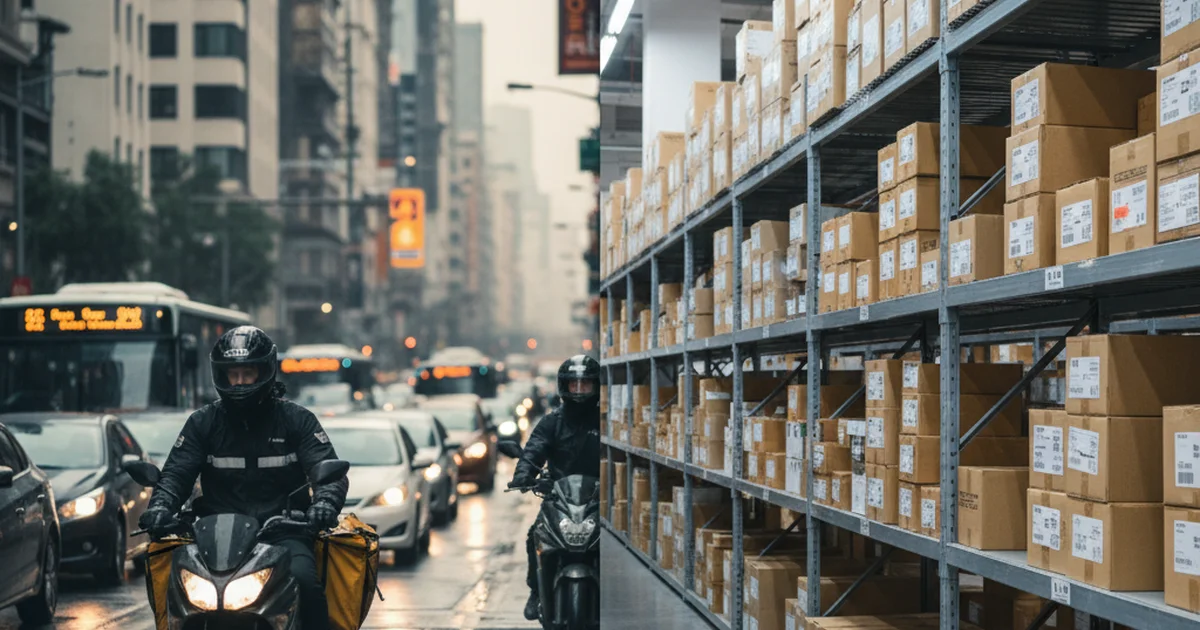
When a production line halts, a hospital theatre awaits a critical component, or a legal team needs documents executed before close of business, same-day courier services are not a convenience — they are an operational necessity. The United Kingdom's courier and express delivery sector, valued at £17.4 billion and home to more than 10,776 registered businesses on the Companies House register, has matured considerably since the disruptions of 2020–2021. Expectations have risen in parallel: clients now demand GPS-tracked consignments, regulatory-compliant handling, and collection windows measured in minutes rather than hours. Yet with thousands of operators competing for business, choosing the right partner remains genuinely difficult. This guide cuts through the noise. Whether you are a procurement manager reviewing logistics contracts, an operations director handling an ad hoc emergency shipment, or a start-up founder arranging your first time-critical delivery, the information below will give you a clear, authoritative framework for making the right decision in 2026.
1. The State of the UK Same-Day Courier Market in 2026
Market size and structural overview
The UK logistics sector is one of the largest in Europe. According to Companies House filings and ONS business population estimates, there are approximately 89,104 logistics businesses operating across the United Kingdom, employing hundreds of thousands of people. Within that broader population, the courier and express delivery sub-sector — companies whose primary activity is the rapid, tracked movement of documents, parcels and freight — accounts for more than 10,776 registered entities.
Market research consistently places the total UK courier market at approximately £17.4 billion in annual revenue. Same-day and time-critical services represent a disproportionately high-value segment of that figure. Unlike next-day or economy parcels, same-day consignments command premium pricing because they require dedicated vehicle allocation, real-time routing and guaranteed collection windows — typically 30 to 60 minutes from booking confirmation.
The Department for Transport (DfT) Road Freight Statistics confirm that light goods vehicles (LGVs) — the backbone of the same-day courier fleet — continue to see year-on-year increases in kilometres travelled, reflecting sustained demand from e-commerce, manufacturing just-in-time supply chains, and the healthcare sector.
Demand drivers reshaping the industry
Several structural forces are accelerating demand for same-day delivery in 2026:
- Supply chain compression: Manufacturers and retailers have reduced stockholding to cut capital costs, meaning any component failure or stock-out requires immediate replenishment rather than a scheduled delivery.
- Healthcare time-criticality: NHS Integrated Care Boards and private hospital groups increasingly outsource urgent pharmaceutical, pathology sample and medical device logistics to specialist couriers rather than maintaining in-house transport.
- Legal and financial deadlines: The UK's 5.2 million active companies (ONS business population estimate) generate enormous volumes of time-sensitive documentation — contracts, deeds, HMRC submissions — that must reach specific recipients within defined windows.
- AOG aviation emergencies: The UK aviation sector, centred on hubs including Heathrow, Gatwick and Manchester, generates constant demand for Aircraft on Ground (AOG) parts logistics where every hour of downtime costs operators tens of thousands of pounds.
- Post-pandemic resilience investment: Businesses that suffered supply chain failures during 2020–2022 have built contingency logistics relationships with same-day operators as part of broader business continuity planning.
2. How Same-Day Courier Services Actually Work
The booking and dispatch process
Understanding the mechanics of a same-day courier booking helps businesses set realistic expectations and communicate requirements accurately. When a client contacts a reputable operator, the following sequence typically unfolds:
- Quote and confirmation: The client provides collection postcode, destination postcode, consignment dimensions, weight and any special handling requirements. The operator calculates distance, vehicle type required and any compliance considerations, then confirms price and estimated collection time.
- Driver allocation: A 24/7 dispatch centre identifies the nearest available, appropriately equipped driver. For standard consignments this should produce a collection window of 30 to 60 minutes from any UK postcode.
- Collection and proof: The driver collects, provides a signed collection receipt and the consignment enters the GPS tracking network. The client receives live updates or has access to a tracking portal.
- Delivery and confirmation: The driver delivers directly to the recipient — no depot sorting, no secondary handling — and obtains a proof of delivery (POD), typically a signature or photographic confirmation.
Vehicle types and their applications
Professional same-day operators maintain a tiered fleet to match vehicle to consignment. The table below summarises common vehicle categories and their typical use cases:
| Vehicle Type | Typical Payload | Common Use Cases |
|---|---|---|
| Motorcycle / bicycle courier | Up to 20 kg | Documents, small parcels, urban legal deliveries |
| Car / saloon | Up to 50 kg | Pharmaceuticals, samples, confidential files |
| Small van (e.g. Ford Transit Connect) | Up to 500 kg | General freight, AOG components, retail stock |
| Medium van (e.g. Ford Transit) | Up to 1,000 kg | Manufacturing parts, exhibition materials, large medical equipment |
| Large van / Luton | Up to 1,500 kg | Palletised freight, bulk pharmaceutical shipments, trade cargo |
| 7.5-tonne rigid | Up to 3,500 kg | Heavy industrial components, air freight ground transport |
Direct drive versus multi-drop
Same-day courier services differ fundamentally from standard parcel carriers in one critical respect: the direct drive model. A dedicated vehicle travels from collection point to delivery point without intermediate depot handling or multi-stop routing. This eliminates the primary causes of delay, damage and misdelivery that affect standard carrier networks, and is the reason same-day services command a premium. Businesses commissioning same-day delivery should verify explicitly that the operator uses dedicated direct-drive allocation, particularly for time-critical or high-value consignments.
3. Regulatory Compliance: What Every Commissioning Business Must Know
DVSA operator licensing
Operators using vehicles over 3.5 tonnes gross vehicle weight for hire or reward must hold a valid Operator Licence issued by the Driver and Vehicle Standards Agency (DVSA). This is a legal requirement under the Goods Vehicles (Licensing of Operators) Act 1995. The DVSA public register allows any business to verify an operator's licence status, the number of authorised vehicles and whether any conditions or curtailments apply. Commissioning businesses are strongly advised to carry out this check before placing a contract — particularly where high-value, regulated or hazardous goods are involved.
For lighter vehicles operating on hire or reward, drivers must hold a valid driving licence and the vehicle must be properly insured for commercial carriage. Goods-in-transit insurance is a separate and important consideration covered below.
Pharmaceutical and healthcare logistics: MHRA and GDP
The transport of medicines, controlled drugs, biological samples and medical devices is governed by a detailed regulatory framework. The Medicines and Healthcare products Regulatory Agency (MHRA) enforces Good Distribution Practice (GDP) guidelines, which require that medicinal products are transported in conditions that preserve their integrity — including temperature control, tamper-evident packaging and chain-of-custody documentation.
Specifically:
- Cold chain: Many pharmaceuticals require transport at 2–8°C (refrigerated) or below -15°C (frozen). Operators must use validated, temperature-monitored vehicles and provide data loggers or temperature certificates on request.
- Controlled drugs: Schedule 2 and 3 controlled drugs require additional documentation under the Misuse of Drugs Regulations 2001. Drivers must be appropriately briefed and operators must maintain audit trails.
- Medical devices: Regulated under the UK Medical Devices Regulations 2002 (as amended post-Brexit), medical devices must be handled in ways that prevent contamination or damage.
Healthcare organisations — whether NHS trusts, private hospitals, care homes regulated by the Care Quality Commission (CQC), or GP practices — should always confirm that a courier partner holds appropriate insurance, temperature-monitoring capability and documented GDP-compliant procedures before committing to a contract.
Hazardous goods: ADR regulations
The carriage of dangerous goods by road in the UK is governed by the ADR (European Agreement concerning the International Carriage of Dangerous Goods by Road) regulations, implemented domestically through the Carriage of Dangerous Goods and Use of Transportable Pressure Equipment Regulations 2009. Hazardous materials are classified into nine classes ranging from explosives (Class 1) to miscellaneous dangerous substances (Class 9).
Operators carrying ADR-classified goods must ensure drivers hold a valid ADR certificate, vehicles carry the correct safety equipment and placarding, and consignment documentation (including transport emergency cards, or TREMcards) accompanies every shipment. Businesses shipping chemicals, batteries, fuels, gases or infectious substances must ensure their courier partner is fully ADR-compliant and should never entrust such consignments to a general-purpose operator without confirming this.
ULEZ and clean air zone compliance
Transport for London's Ultra Low Emission Zone (ULEZ), enforced by TfL, now covers the entirety of Greater London. Vehicles that do not meet Euro 6 (diesel) or Euro 4 (petrol) emission standards are subject to a daily charge of £12.50 for vans and £100 for heavier vehicles. Equivalent Clean Air Zones (CAZs) are operational in Birmingham, Bath, Bristol, Bradford, and Newcastle, with further schemes under development.
For businesses commissioning deliveries into or within affected zones, using a non-compliant operator means either paying surcharges passed through to the client or — more problematically — risk of the driver avoiding the zone and delivering late. A ULEZ-compliant fleet is therefore not simply an environmental consideration; it is a direct operational reliability factor.
Insurance: goods-in-transit and public liability
Standard motor insurance does not cover the goods being carried. Reputable same-day courier operators carry dedicated goods-in-transit (GIT) insurance — typically £50,000 to £50,000 per consignment as standard, with enhanced cover available for high-value shipments. Public liability insurance, generally a minimum of £1,000,000 (and often £5–10 million for professional operators), covers third-party injury or property damage during the course of delivery operations.
Businesses in regulated sectors — particularly financial services firms regulated by the FCA, or legal practices handling original documents — should request a copy of the operator's certificate of insurance before the first booking and ensure the cover level is adequate for their typical consignment values.
4. Key Service Categories and Their Business Applications
Same-day document and parcel courier
The foundational same-day service: a dedicated vehicle collects a document or parcel and delivers it directly to the recipient, typically within the same county or region, though cross-country same-day routes are also routinely operated. Common clients include law firms, accountancy practices, financial institutions, estate agencies and HR departments. Critical applications include court bundles, signed contracts, share transfer documents, mortgage completions and executed deeds.
AOG aviation support
Aircraft on Ground (AOG) situations represent some of the most acutely time-critical logistics requirements in any industry. When an aircraft is grounded due to a component failure, every hour of delay incurs direct operating costs and passenger compensation liability. AOG parts logistics requires operators who maintain 24/7 dispatch capability, understand cargo handler collection procedures at UK airports, and can coordinate with freight forwarders and airline maintenance teams simultaneously. Key airports served by professional same-day operators include Heathrow (LHR), Gatwick (LGW), Stansted (STN), Luton (LTN), Manchester (MAN), Birmingham (BHX) and Edinburgh (EDI).
Heathrow air freight ground transport
Heathrow Airport handles approximately 1.5 million tonnes of air freight annually, making it the UK's dominant cargo hub. Ground transport between Heathrow's cargo terminals — particularly the World Cargo Centre and individual airline cargo facilities — and business premises across the UK is a specialised service requiring familiarity with Heathrow's security protocols, permit requirements and terminal geography. Same-day operators with established Heathrow relationships can significantly reduce the friction and delay associated with import collection and export delivery.
Pharmaceutical cold chain logistics
As noted in the regulatory section, pharmaceutical cold chain transport requires temperature-validated equipment and documented procedures. This service is used by pharmaceutical wholesalers, hospital pharmacy departments, clinical trial logistics managers, veterinary practices and GP surgeries. The consequences of temperature excursion — product spoilage, patient safety risk, regulatory non-compliance — mean that price should never be the primary selection criterion for cold chain services. Demonstrated MHRA GDP compliance, calibrated temperature monitoring and transparent incident reporting are the critical evaluation factors.
Hazardous goods courier
ADR-compliant same-day transport covers a wide range of industrial and commercial needs: chemical samples for laboratory analysis, lithium battery consignments (Class 9), fuel additives, compressed gas cylinders, and infectious substance specimens (Class 6.2) for medical diagnostics. Industries regularly requiring this service include oil and gas, construction, automotive, aerospace, pharmaceutical manufacturing and research institutions.
5. Geographic Coverage: Which UK Cities and Regions Are Served?
National reach with regional depth
A credible same-day courier operator in 2026 should be capable of collecting from any UK postcode within 30 to 60 minutes and delivering to any UK destination on the same day, subject to distance and timing. The major cities where same-day demand is highest — and where the density of businesses using the service is greatest — include:
- London (and the Home Counties)
- Manchester and Greater Manchester
- Birmingham and the West Midlands
- Glasgow and the Central Belt
- Edinburgh and Lothian
- Liverpool and Merseyside
- Leeds and West Yorkshire
- Sheffield and South Yorkshire
- Bristol and the South West
- Cardiff and South Wales
- Belfast and Northern Ireland
- Newcastle and the North East
- Nottingham, Leicester and the East Midlands
- Cambridge, Oxford and the Thames Valley
Cross-border and island considerations
Deliveries to Northern Ireland involve the additional consideration of the Windsor Framework, which affects the movement of certain goods — particularly food products and some regulated items — between Great Britain and Northern Ireland. Deliveries to Scottish islands, the Isle of Man and the Channel Islands require specific logistics arrangements that not all mainland operators can accommodate. Businesses with regular requirements in these areas should confirm capability explicitly during the operator selection process.
6. What Determines the Cost of a Same-Day Courier?
Primary cost factors
Same-day courier pricing is bespoke by nature. Unlike a parcel carrier's published rate card, same-day quotes are calculated dynamically based on several variables:
- Distance: The total mileage from collection to delivery is the primary driver. Urban short-haul routes command lower absolute prices but higher per-mile rates than long-distance motorway runs.
- Vehicle type: A motorcycle courier is cheaper than a Luton van. Matching vehicle to consignment accurately is both a cost management and a reliability consideration.
- Time of booking: Out-of-hours bookings — evenings, weekends, Bank Holidays — typically attract a premium to reflect the higher cost of 24/7 dispatch and driver availability.
- Consignment characteristics: Weight, dimensions, fragility, temperature requirements and hazardous classification all affect the cost of appropriate handling and insurance.
- Collection window: A 30-minute collection requirement may cost more than a 60-minute window because of the operational intensity required to guarantee it.
- Waiting time: If the driver must wait at collection or delivery for loading, unloading or access, this is typically charged at an hourly rate.
- Clean Air Zone surcharges: Where a non-compliant vehicle cannot be avoided, CAZ charges may be passed through. With a ULEZ-compliant fleet, this risk is eliminated.
Account versus ad hoc pricing
Businesses with regular same-day delivery requirements benefit considerably from establishing an account with a preferred operator. Account pricing typically offers preferential rates, priority dispatch during peak periods, consolidated invoicing (simplifying VAT reclaim processes), and a dedicated point of contact for complex bookings. Ad hoc (one-off) bookings are always available but may carry a small premium relative to contracted account rates.
False economies to avoid
The lowest-quoted price is rarely the lowest total cost when same-day logistics fail. Consider the downstream consequences of choosing an operator on price alone:
- A delayed pharmaceutical shipment may result in wasted product and emergency re-procurement costs far exceeding the original courier fee.
- A missed legal deadline may expose the commissioning firm to professional liability.
- An AOG part delivered two hours late costs the airline multiples of the courier fee in passenger compensation and engineering downtime.
- A temperature excursion in a cold chain shipment may invalidate a consignment worth thousands, with the courier's insufficient GIT insurance leaving the gap unrecovered.
Reliability, compliance and insurance adequacy should always be evaluated alongside price when selecting a same-day courier partner.
7. How to Evaluate and Select a Same-Day Courier Partner
Eight criteria for a rigorous assessment
When assessing potential same-day courier partners, procurement and operations teams should apply the following framework:
- DVSA licence verification: Confirm the operator holds a valid Operator Licence (where applicable) via the DVSA public register at gov.uk.
- Insurance documentation: Request current certificates for goods-in-transit and public liability insurance. Verify cover levels are appropriate for your consignment values.
- Fleet compliance: Confirm the fleet meets ULEZ and relevant CAZ standards if deliveries into affected urban zones are anticipated.
- GPS tracking capability: Real-time tracking is a baseline expectation in 2026, not a premium feature. Confirm the tracking method and client access.
- 24/7 dispatch: Time-critical shipments do not respect office hours. Verify the operator maintains genuine 24/7 dispatch — not an answering service that escalates to a duty manager.
- Specialist compliance: For pharmaceutical, hazardous, or AOG consignments, request documented evidence of relevant compliance — MHRA GDP procedures, ADR certification, or airport handling experience as appropriate.
- Collection time guarantee: Ask specifically what collection window is guaranteed and what happens if it is not met. A reputable operator will have a clear, contractual answer.
- References and ratings: Independent review platforms such as Google Reviews provide verified client feedback. A consistent track record of positive reviews from business clients in your sector is meaningful evidence of operational reliability.
Questions to ask before your first booking
Beyond the formal evaluation criteria, the following practical questions help establish whether an operator is the right fit for your specific needs:
- What is your average collection time from the Thames Valley or your region?
- Do you have experience handling consignments for clients in our sector?
- How do you handle a breakdown or driver unavailability mid-route?
- What is your escalation process if a delivery is at risk of missing its deadline?
- Can you provide temperature data logs for pharmaceutical shipments?
- What is your claims process for damaged or lost consignments?
8. Technology, Tracking and Transparency in 2026
GPS tracking as standard
By 2026, GPS-tracked delivery is a baseline expectation across the same-day courier sector. Clients expect to know, in real time, where their consignment is — not just at collection and delivery milestones, but throughout the journey. Leading operators provide either a client-facing tracking portal, live map links shared via SMS or email, or both. For regulated consignments — particularly pharmaceutical shipments subject to GDP audit requirements — a complete, timestamped tracking record also serves as a compliance document.
Digital proof of delivery
Electronic proof of delivery (ePOD), combining a timestamp, GPS coordinates and photographic or signature confirmation, has largely replaced paper-based POD systems in professional same-day operations. ePOD records are retrievable on demand, integrate with client ERP and logistics management systems, and provide legally robust evidence of delivery for contractual and insurance purposes.
Dispatch technology and response times
Modern same-day dispatch operations use sophisticated job management platforms that match available drivers to new bookings algorithmically, optimising for proximity, vehicle type and current workload. This technology is what makes a 30-minute collection guarantee achievable at scale. When evaluating operators, it is worth asking whether dispatch is handled by a dedicated operations centre or by a sole trader using a mobile phone — the difference in reliability under pressure is considerable.
9. Industry-Specific Considerations
Legal and professional services
Law firms, barristers' chambers, notaries and conveyancing solicitors are among the heaviest users of same-day document courier services in the UK. The specific requirements of this sector include chain-of-custody documentation, confidentiality obligations (under the Solicitors Regulation Authority Code of Conduct and equivalent professional standards), and absolute deadline adherence for court filings and completion transactions. Operators with a track record in legal logistics understand that a missed deadline is not an inconvenience — it is a professional liability event.
Manufacturing and engineering
Just-in-time manufacturing — dominant across the UK's automotive, aerospace and electronics sectors — generates consistent demand for same-day component delivery when scheduled supply chains fail. A single missing component can halt a production line costing thousands of pounds per hour in downtime. Operators serving this sector need to be available 24 hours a day, 365 days a year, and must be capable of handling components ranging from small precision parts to large fabricated assemblies.
Retail and e-commerce
Premium retailers and e-commerce operators increasingly offer same-day delivery as a competitive differentiator, particularly in major urban centres. The fulfilment model typically involves a courier collecting from a central warehouse or dark store and delivering to a residential or business address within a defined window. Retailers considering same-day fulfilment partnerships should evaluate courier capacity during peak trading periods — Christmas, Black Friday, January sales — as this is when operational reliability is most tested and most consequential.
Financial services
Banks, insurance companies, investment managers and financial advisers regulated by the Financial Conduct Authority (FCA) regularly require same-day delivery of original signed documents, cheques, certificates and regulatory filings. The FCA's conduct rules and record-keeping requirements mean that chain-of-custody documentation and secure handling are non-negotiable. Financial services firms should ensure courier partners carry adequate professional indemnity and GIT cover for the values of instruments routinely transported.
10. T&C Logistics: An Operator Profile
Background and capability
T&C Logistics was founded in 2020, based in the Thames Valley, and has grown to serve businesses across many UK cities. The company operates a ULEZ-compliant fleet with GPS tracking on every vehicle, providing 24/7 dispatch 365 days a year with a guaranteed collection window of 30 to 60 minutes from any UK postcode.
Core service lines include:
- Same-day courier (documents, parcels, freight)
- AOG aviation support and airport logistics
- Heathrow air freight ground transport
- Pharmaceutical cold chain logistics
- Hazardous goods courier (ADR-compliant)
T&C Logistics holds a Google Reviews rating of 5.0 out of 5 from 13 verified business reviews — a meaningful indicator of consistent operational performance for a specialist operator focused on quality over volume.
Founder perspective
"In same-day logistics, the margin for error is zero. A client whose production line is stopped or whose patient is waiting for a medication does not want explanations — they want their consignment collected in 30 minutes and delivered safely. That standard is what we built T&C Logistics around from day one, and it is what we hold ourselves to on every single job, whether it is a document run to central London or an AOG part to Heathrow at 3 o'clock in the morning."
— Taras Zavalinii, Founder, T&C Logistics
Contact and availability
T&C Logistics operates two direct lines to ensure clients can always reach a human dispatcher:
- +44 7963 400173 — available 06:00 to 17:00
- +44 7737 778964 — available 08:00 to 22:00
An online quote form is also available at tclogistics.uk/contact#quote-form for non-urgent enquiries and account applications.
11. Common Mistakes Businesses Make When Using Same-Day Couriers
Booking too late
Even with a 30-minute collection guarantee, businesses occasionally leave bookings dangerously close to hard deadlines — legal completion times, airport cargo cut-off times, pharmacy closing times. Building in a buffer of at least 60 to 90 minutes beyond the minimum required transit time is prudent, particularly for first-time routes or unfamiliar destinations.
Underspecifying the consignment
Providing inaccurate dimensions, weight or handling requirements at the point of booking can result in the wrong vehicle being dispatched — a car arriving for a pallet, or a driver without ADR certification for a hazardous shipment. Accurate consignment information is the commissioning business's responsibility and directly affects both price accuracy and operational success.
Overlooking packaging requirements
Same-day couriers operate with care, but the consignment must be adequately packaged for the transit involved. Fragile items require appropriate internal cushioning. Temperature-sensitive goods must be pre-chilled and packed in validated thermal containers before collection. Hazardous goods must be packaged in UN-approved containers as specified by ADR regulations. The courier is responsible for transport; the shipper is responsible for packaging compliance.
Assuming all operators are equivalent
The 10,776 courier companies on the Companies House register range from sole-trader drivers operating a single vehicle to national networks with hundreds of staff. Capability, compliance and reliability vary enormously across this spectrum. The evaluation framework set out in Section 7 of this guide exists precisely because the differences between a professional, compliant operator and an inadequate one are not visible from a website alone.
Failing to establish an account relationship proactively
Businesses that wait until an emergency arises to find a same-day courier partner inevitably make sub-optimal decisions under pressure. Establishing a preferred supplier relationship — including credit account terms, agreed service levels and familiarity with your specific requirements — before the urgent need arises is one of the most straightforward resilience improvements any operations team can make.
12. The Future of Same-Day Courier Services in the UK
Electric and zero-emission fleets
The UK Government's commitment to zero-emission vehicles — with the sale of new petrol and diesel vans phased out from 2035 — is accelerating fleet electrification across the courier sector. ULEZ and CAZ frameworks are the leading edge of this transition, but operators who invest in electric vehicle (EV) infrastructure now are positioning themselves advantageously for the regulatory environment of the late 2020s and 2030s. For commissioning businesses, an operator's fleet electrification roadmap is increasingly relevant to long-term contract decisions.
Automation and route optimisation
AI-driven dispatch systems are improving collection time performance and route efficiency across the sector. Predictive demand modelling — using historical booking patterns to pre-position drivers in high-demand areas — is reducing average collection times in urban centres. For clients, this translates to more reliable collection windows and, over time, more competitive pricing as operational efficiency improves.
Regulatory evolution
Post-Brexit regulatory divergence between UK and EU logistics standards continues to develop. Businesses operating cross-border supply chains should monitor DVSA and MHRA guidance for updates to operator licensing, drug import/export procedures and ADR alignment. The gov.uk guidance portal remains the authoritative source for current requirements.
Demand consolidation
The UK same-day market is likely to see some consolidation among smaller operators over the coming years, driven by the capital costs of fleet electrification, technology investment requirements and tightening regulatory compliance burdens. For businesses, this means that the relationships established with quality, financially stable operators in 2025–2026 are likely to become increasingly valuable as the market matures.
Ready to Commission a Same-Day Delivery?
T&C Logistics operates 24 hours a day, 365 days a year, with a ULEZ-compliant fleet, GPS tracking on every consignment, and a 30–60 minute collection guarantee from any UK postcode. Whether you need a same-day document courier, AOG aviation support, pharmaceutical cold chain transport, or hazardous goods logistics, our dispatch team is ready to assist.
Call us now:
- 06:00–17:00: +44 7963 400173
- 08:00–22:00: +44 7737 778964
Alternatively, submit your requirements using our online quote form and a member of our team will respond promptly.
Same-Day Courier Services by City
Find same-day courier services near you — we cover many UK cities with collection within 60 minutes:
- Aberdeen
- Belfast
- Birmingham
- Brighton
- Bristol
- Cardiff
- Coventry
- Derby
- Edinburgh
- Glasgow
- Hull
- Leeds
- Leicester
- Liverpool
- London
- Luton
- Manchester
- Milton Keynes
- Newcastle
- Nottingham
- Oxford
- Plymouth
- Portsmouth
- Reading
- Sheffield
- Southampton
- Stoke
- Swansea
- Wakefield
- Wolverhampton
Related Glossary Terms
Questions
- How quickly can a same-day courier collect from my location?
- Professional same-day courier operators guarantee collection within 30 to 60 minutes from any UK postcode. This requires 24/7 dispatch capability and a geographically distributed fleet. When booking, confirm the specific collection window guarantee with your operator rather than assuming a standard timeframe applies.
- Is same-day courier delivery more expensive than next-day?
- Yes, same-day courier services command a premium over next-day parcel carriers because they use a dedicated direct-drive model — a single vehicle allocated exclusively to your consignment, with no depot handling or multi-stop routing. The premium reflects that operational model, plus 24/7 availability and guaranteed collection windows. For time-critical consignments, the cost of failure almost always exceeds the premium.
- Can a same-day courier transport pharmaceutical or hazardous goods?
- Yes, provided the operator holds the appropriate compliance credentials. Pharmaceutical cold chain transport requires MHRA GDP-partner-network procedures and temperature-validated vehicles. Hazardous goods transport requires ADR-certified drivers and UN-approved packaging. Always request documented evidence of compliance before booking either category, and never assume general-purpose courier capability extends to regulated consignments.
- How do I verify that a courier company is legitimate and properly insured?
- Check the DVSA public register at gov.uk to verify Operator Licence status for operators using vehicles over 3.5 tonnes. Request current certificates of goods-in-transit insurance and public liability insurance directly from the operator. For specialist services, ask for evidence of MHRA GDP compliance, ADR certification or airport handling authorisation as relevant. Independent Google Reviews reviews from verified business clients provide additional reliability evidence.
- Do same-day couriers operate on weekends and Bank Holidays?
- Reputable same-day courier operators maintain 24/7 dispatch 365 days a year, including weekends and Bank Holidays. Out-of-hours bookings may attract a modest premium. When establishing an account relationship, confirm explicitly that the operator maintains staffed dispatch — not simply an on-call answering service — during the hours most relevant to your operational requirements.
Explore more
More from the blog
- UK Pharmaceutical Transport: GDP Compliance Guide […
- Aerospace AOG Support: Emergency Parts Delivery Acr…
- Heathrow Cargo: The Complete Guide for Freight Ship…
- UK Pharmaceutical Cold Chain Logistics: 2026 Compli…
- Van Size Guide: Which Courier Vehicle Do You Need?
- Top 10 UK Cities for Logistics Companies (2026)